

.avif)


When I plan activities for 3-year-olds at home, I focus on play that feels easy to start and fun to repeat. I've used these ideas with real toddlers who bounce between calm and crazy in minutes.
7 best activities for 3-year-olds at home: TL;DR
1. Interactive TV games
What it does: Turns your TV into an active play station where your toddler talks, sings, and moves instead of just watching.
Who it’s for: Parents who want quick, low-effort 3-year-old activities that still feel engaging and developmentally useful.
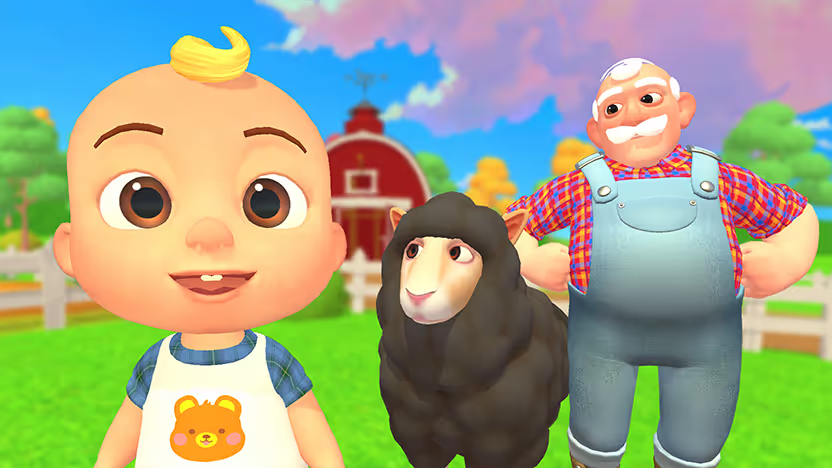
I lean on interactive TV games as my top pick because I can set them up fast and keep my 3-year-old involved. With Weekend, one of the best apps for toddlers, I can start CoComelon: Sing & Play with JJ, which allows my child to copy JJ’s actions, sing along, and follow easy on-screen directions.
Key features
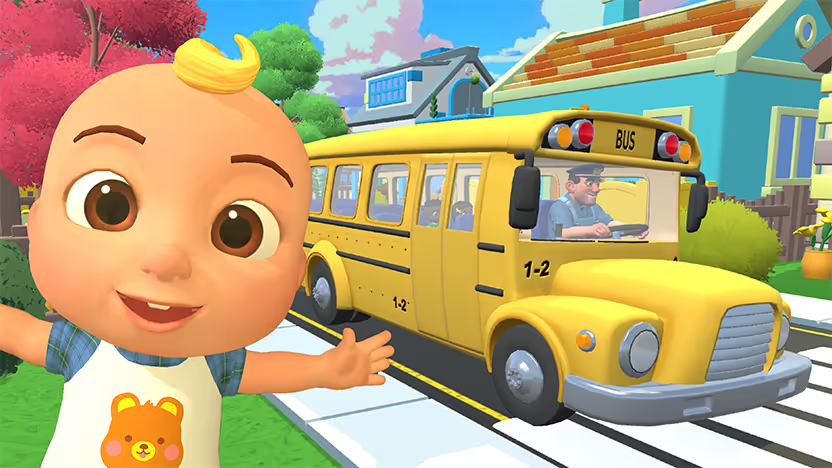
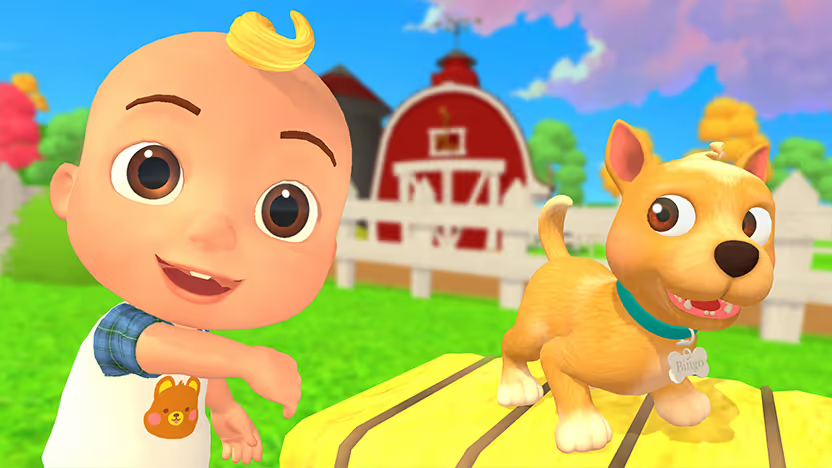
- CoComelon: Sing & Play with JJ offers sing-and-move songs like Wheels on the Bus that toddlers understand right away.
- Simple controls mean I can set the game up with my remote or phone in a few taps.
- Short rounds fit neatly between meals, naps, or other toddler activities.
Pros
- Turns the TV into active play and learning with music, gestures, and simple choices.
- Works for solo play with me nearby or together time when I join in.
- Easy to repeat on tough days when I need a no-prep win.
Cons
- Requires a compatible smart TV (LG, Samsung, Fire TV) and internet.
- I still need to set clear time limits so “one more round” does not drag out.
Bottom line
When I rank activities for 3-year-olds at home, interactive TV games sit at the top of my list. They mix convenience for me with real engagement for my child, which is a blessing in a world where taking a break seems like a luxury.
2. Living room obstacle course
What it does: A simple obstacle course uses pillows, tape, and furniture to create a path for climbing, jumping, and crawling.
Who it’s for: This works best for active kids who need to move their bodies several times a day. I rely on it on rainy days when outdoor play is hard.
Couch cushions go down in a simple path, with painter’s tape as a balance line and a blanket tunnel at the end. My child hops, balances, and crawls through the course, which burns off energy and builds core strength.
Key features
- Simple materials like pillows, tape, and chairs keep setup fast and budget-friendly.
- A quick demo lap with commentary shows kids exactly where to jump, crawl, and balance.
- Small tweaks each round, like adding a roaring station or a tiptoe line, keep it exciting.
Pros
- Great for gross motor skills such as jumping, balancing, and crawling.
- Flexible for small or large spaces.
Cons
- Requires some supervision to keep things safe.
- Can create clutter if I leave it up too long.
Bottom line
This is one of my go-to 3-year-old activities when I see my child bouncing off the walls. Ten minutes of obstacle fun often resets the whole mood.
3. Sensory bins
What it does: A sensory bin uses a container filled with materials like rice, dry beans, or water for scooping, pouring, and pretend play.
Who it’s for: Sensory bins help toddlers who like to touch everything and enjoy slow, focused play.
Dry pasta or rice goes into a plastic bin with cups, spoons, and small toys tucked inside. My child scoops, pours, buries, and “cooks” for long stretches, which builds fine motor control and imagination.
Key features
- Everyday fillers such as rice, beans, or water turn a basic bin into a sensory playground.
- Clear ground rules about where the materials stay help contain the mess and stress.
- Swapping themes, from construction site to ocean world, refreshes the same bin again and again.
Pros
- Supports sensory processing and hand-eye coordination.
- Keeps some children engaged for long chunks of time.
Cons
- Spills happen, so I put a towel or sheet under the bin.
- Not ideal if you have a toddler who still mouths small items.
Bottom line
Among activities for 3-year-olds at home, sensory bins give me the most quiet play for the least effort when I set them up well.
{{cta-cocomelon}}
4. Sticker and tape station
What it does: A simple tray with stickers, paper, and washi or painter’s tape becomes a fine motor activity.
Who it’s for: This is ideal when I need my child seated at the table while I cook or answer emails.
A sheet of paper, a roll of tape, and a page of stickers go on the table within easy reach. My child peels, sticks, and rips each piece, strengthening the finger muscles needed for early writing.
Key features
- Dry supplies like stickers and tape make this a low‑mess option for small spaces or busy days.
- A dedicated page or notebook gives kids a clear place to create and proudly show their work.
Pros
- Great for travel or restaurant-style waiting.
- Builds focus in short bursts.
Cons
- Some children need help peeling.
- Stickers can end up on furniture if I forget to set rules.
Bottom line
I treat this as one of my “emergency toddler activities” for quick quiet time.
5. Block and car city
What it does: Building a “city” with blocks, cars, and small figures encourages storytelling and problem-solving.
Who it’s for: Great for kids who like vehicles or construction themes.
I lay out blocks, cars, and a road drawn with tape. My child builds garages, bridges, and “parking lots” and narrates little stories about where everyone is going.
Key features
- Open‑ended building invites kids to design streets, garages, and bridges in their own way.
- Extra pieces, such as animals, people, or cardboard ramps, stretch stories and problem‑solving.
Pros
- Supports imagination and spatial skills.
- Can shift between solo play and shared play.
Cons
- Stepping on blocks hurts, so we clean up together after play.
- You need enough pieces to make it interesting.
Bottom line
When I rotate my toddler’s activities, I prefer this one for long stretches of creative play.
6. Dance and freeze party
What it does: A quick dance session helps toddlers burn energy and practice listening.
Who it’s for: Perfect during cranky transitions like pre-dinner or post-nap.
A favorite song goes on, everyone dances together, and “freeze” gets called at random moments to practice stop-and-go control.
Key features
- Any playlist from a speaker or TV turns the room into a quick movement break.
- Built‑in mini games like “freeze,” “copy my move,” or “dance like an animal” boost listening skills.
Pros
- Supports gross motor skills and rhythm.
- Great reset when everyone feels restless.
Cons
- Can ramp kids up before bedtime if I do it too late.
Bottom line
Among toddler activities, this is my fastest way to shift a grumpy mood into giggles.
7. Quiet solo play baskets
What it does: Pre-made baskets of simple toys help kids practice independent play.
Who it’s for: Helpful if your child wants you near all the time and you need small breaks.
Shoebox-sized bins get packed with little worlds, like a car garage, a herd of animals, or a puzzle corner. One basket comes out at a time while I hang nearby, gently stretching how long my child can happily play without my constant help.
Key features
- One themed basket out at a time keeps choices simple and clutter under control.
- Familiar, well‑loved toys inside each bin make independent play feel safe and inviting.
Pros
- Builds independence and focus.
- Makes cleanup easier because everything goes back in the same bin.
Cons
- Some kids need many tries before they can play alone comfortably.
Bottom line
This activity helps me balance my child’s need for connection with my own need to get things done.
How I choose activities for 3-year-olds
When I sort through activities for 3-year-olds, I think about what will actually feel good for both of us in the moment. I want ideas that spark my child’s curiosity, fit our energy level, and do not leave me drowning in cleanup afterward.
Engagement comes first
I watch whether an activity pulls my child in for at least a few minutes without me begging them to keep going. If their eyes light up, their body moves with purpose, and they ask to do it again, it stays on my list.
Skill-building comes next
I look for hidden benefits like motor practice, new words, or simple problem-solving that sneak in through play. It feels good to know that hopping, pouring, or pretending is quietly helping them grow.
Setup and cleanup are the final filter
I reach for ideas that set up in under 10 minutes and pack away just as quickly. If an activity leaves the room wrecked every time, it does not earn “everyday” status, no matter how cute it looks.
Mood and timing guide what I pick in the moment:
- High-energy bursts call for obstacle courses or dance-and-freeze games that let my child jump, spin, and laugh it out.
- Quiet pockets lean toward calmer choices like sensory bins, simple art.
- A CoComelon sing-and-play session on the TV where we cuddle close and sing together.
Each activity has its place and time.
Which activities should you start with?
Start with three simple lanes of 1 active, 1 creative, and 1 screen-based. Use interactive TV games like CoComelon: Sing & Play with JJ when you want guided on-screen music play. Then, mix in obstacle courses or dance games for movement, and sensory bins or stickers for calmer focus.
Keep the day relaxed and light by skipping complicated crafts and tight schedules, and leaning on short blocks you can repeat. Most 3-year-olds do best with quick bursts of play that match their mood, not a packed agenda.
Interactive TV games for all ages, with Weekend
Weekend makes interactive TV games for all ages feel like a smart, joyful swap for passive shows, especially when you need activities for 3-year-olds that actually hold their attention. When your toddler wants JJ and songs, you get something that feels like real play, not just another looped video.
CoComelon: Sing & Play with JJ (Fire TV, Samsung, LG) turns your living room into a music-powered playroom. Your toddler can hop on JJ’s bus, clap through BINGO, play peek-a-boo, or explore farm scenes and “look and learn” adventures. Each mini-game nudges your child to move, point, and speak up.
For the rest of the family, the same Weekend app holds a whole lineup of voice-interactive TV games:
- Trivia fans can shout answers in Jeopardy! or spin and solve puzzles in Wheel of Fortune.
- Music lovers can battle it out in Song Quiz or belt their hearts out in Karaoke (on Roku).
- Quick-hit party games like 20 Questions and Guess the Emoji (both on Roku) keep older kids, teens, and adults talking to the screen and to each other.
Find the Weekend app (Fire TV, Samsung, Roku, LG) and start your 7-day free trial today. Let CoComelon: Sing & Play with JJ be your toddler’s new favorite “I get to join the show” moment.
When the kids head to bed, you still have a full roster of interactive TV games ready for family nights, holidays, and lazy weekends.
FAQs
What is the best activity for 3-year-olds at home?
The best activity for 3-year-olds at home is an interactive game that mixes music, movement, and simple choices. For my toddler, CoComelon: Sing & Play with JJ (Fire TV, LG, Samsung) on the Weekend app turns our TV into a safe, guided play session that feels fun, not draining.
How long should activities for 3-year-olds last?
Activities for 3-year-olds should usually last about 10 to 20 minutes before you switch. I watch my child’s cues and change to another play idea as soon as I see boredom or frustration, so the day stays lighter for both of us.
How many activities does a 3-year-old need each day?
A 3-year-old needs a small mix of 3 to 6 simple activities spread throughout the day. I repeat the easy wins, like a quick obstacle course or CoComelon: Sing & Play with JJ session on Weekend, and sprinkle in new ideas when we both have more energy.
Is interactive TV play okay for 3-year-olds?
Yes, interactive TV play is okay for 3-year-olds when it gets them moving, singing, and talking instead of just watching. I keep sessions short and use CoComelon: Sing & Play with JJ as one of several tools, alongside non-screen play like sensory bins and pretend games.
How can I download the Weekend app on a smart TV?
You can download Weekend’s app on a smart TV (LG, Samsung, Roku, Fire TV) by opening your device’s app store and searching for “Weekend.” On my Fire TV, I tap to install, launch the app, and then follow the on-screen steps so my toddler can jump into CoComelon: Sing & Play with JJ and other games fast.









.png)
%20(1).png)
%20(1).png)

Free for 7 days. Cancel anytime.


