

.avif)
.avif)
.avif)
Learning how to host a trivia night starts with a room full of people eager for one more question. I've watched family members turn into fierce rivals over a music clue, then keep the argument alive in the group chat for days.
After hosting plenty of game nights, I've learned that the best ones get people laughing and talking long after the score is final. I'll show you how to host trivia that has people asking about the next round before the first one ends.
How to host a trivia night: TL;DR
- Pick a format that fits your crowd
- Build teams people enjoy being on
- Prepare questions people want to answer
- Set rules before the energy takes over
- Set up a room built for big reactions
- Add a few memorable twists
- Avoid mood-killing mistakes
How to host a trivia night at home
Host a trivia night at home by giving friends and family a reason to lean in and argue over an answer nobody wants to get wrong.
5 to 7 rounds with 8 to 12 questions per round give a trailing team room to rally and turn the final question into a moment everyone remembers.
Teams of 2 to 6 fit most living rooms. Smaller teams give each guest room to speak up, and bigger teams turn a single clue into a small argument nobody wants to lose.
1. Pick a format that fits your crowd
A game format sets the mood before the first question appears. Some groups want a tight, competitive race to the finish. Others just want an excuse to laugh at the friend who answers with total confidence and gets it completely wrong.
I keep categories broad at first, mixing pop culture, sports, music, and general knowledge so every guest finds at least one round to own.
Personal categories often land hardest with family and close friends. A round built around an old vacation disaster, a hometown legend, or a running family joke tends to get the loudest reaction of the night.
Working a few game-show party ideas into the format can turn a birthday or reunion into the kind of night people bring up for years.
For an at-home setup with real quiz-show energy, I reach for Jeopardy! It plays like the show itself, right down to the pacing and the countdown that makes everyone blurt out an answer half a second too early.
Pick Casual, Classic, or Expert mode, then shout your answer the moment the clue hits the screen.
{{cta-jeopardy}}
2. Build teams people enjoy being on
Balanced teams create close scores and better conversations. I mix the sports fan and the music buff onto different teams, then scatter the quiet trivia genius somewhere in between.
A mix of talkers and quiet thinkers works well too. Quieter players often land the answer after the first wave of guesses fades, and that single moment can flip a team's whole night around.
Give everyone a few minutes to choose a team name. Funny names create an early win for the room and give the scoreboard some personality.
Large gatherings need a bit more structure to keep every team engaged. A few large-group games for gatherings at home can help shape the room before the competition begins.
3. Prepare questions people want to answer
Questions should pull people into the game, not make them feel quizzed. A tough question still works when the room recognizes enough to take a real swing at it.
I start each round with an easy win, then raise the difficulty as the round moves along. Early answers get the room talking, and later questions keep everyone leaning toward the scoreboard.
Use different question types to keep the energy up:
- General knowledge questions
- Music clips
- Picture clues
- True-or-false questions
- Closest-answer tiebreakers
A mix of trivia questions and answers gives me room to match categories to the people in front of me.
If your group runs deep with die-hard fans, a few sports trivia questions can start rivalries that last well past the final round.
4. Set rules before the energy takes over
A short rule rundown keeps the host from settling disputes all night. Walk through the basics fast, then let the first question do the rest of the talking.
My usual rules stay simple:
- Keep phones off the table during questions
- Give teams 30 to 60 seconds for each answer
- Collect answers after every round
- Reveal answers together
- Post scores where every team can see them
- Use a closest-guess question to settle a tie
- Let the host make the final call on disputed answers
A visible scoreboard turns a friendly game into a real contest. One point can lift a quiet team into a late threat, and the room gets loud fast once the gap closes.
{{cta-fortune}}
5. Set up a room built for big reactions
Good seating keeps teams close together for chatter, with just enough space between tables to guard each group's answers. I put the screen where everyone can see it and leave room for snacks, drinks, and answer sheets.
Warm lighting and low music between rounds keep the mood loose.
A short break after the middle round gives people time to refill a plate and trade trash talk before the next question hits.
Small prizes make the final score feel like a real moment. A toy trophy, a paper crown, or first pick of dessert can turn into a running joke that follows your group into the next game night.
The prize barely matters. The story it creates is what people actually remember.
6. Add a few memorable twists
A DIY trivia night needs a few surprises. Guests remember the round that broke from the pattern, the one with a sound effect nobody saw coming, or the inside joke that only 3 people in the room understood.
Try a twist that fits your crowd:
- Double points during one late round
- A mystery category with a dramatic reveal
- One steal chance for each team
- A themed snack for every round
- A wager before a hard question
- A bonus point for the funniest wrong answer
A game-show format can shape the whole night around risk and confidence. Working in a few Jeopardy! categories gives teams a reason to wager big and sweat the reveal.
{{cta-spoton}}
7. Avoid mood-killing mistakes
Long explanations can drain the room before the game even begins. Start fast and let the format prove itself through play.
Question difficulty can quietly wreck a round. Too many easy questions flatten the score, and too many hard ones leave the room staring at blank sheets. Watch the energy during round one and adjust the next round to match it.
A dead mic or a frozen app can kill momentum faster than a bad question. I test the sound and the app before guests walk in, so nothing interrupts the room once the game starts.
Weekend handles most of the pacing from that point, on Roku, Fire TV, and LG and Samsung smart TVs, which frees me up to actually watch the reactions instead of the screen.
Weekend brings the quiz-show feeling home
Weekend answers the question of how to host a trivia night without spending the whole evening tracking answer sheets. Every game gives guests a shared screen and a reason to lean forward for the next clue.
Our lineup includes:
- Jeopardy! brings the official TV game to your screen with familiar clues, the same atmosphere, rules, and pacing.
- Song Quiz brings music trivia across decades and genres into the room; hear a short clip and shout the song and artist for points.
- Wheel of Fortune turns players into puzzle solvers, calling letters together and racing to crack the board before the other team.
- Karaoke (on Roku) tracks lyrics and pitch, so the sing-off can carry on once the trivia questions wind down.
- Guess the Emoji challenges the room to decode movies, phrases, and pop-culture clues from emoji strings.
- Sketchy AF builds a drawing a stroke at a time, and the earlier you guess, the more you score.
- Spot On sends the group around the world from the living room, dropping pins and racing to guess landmarks.
- 20 Questions (on Roku) turns every guess into a group debate the whole table can join.
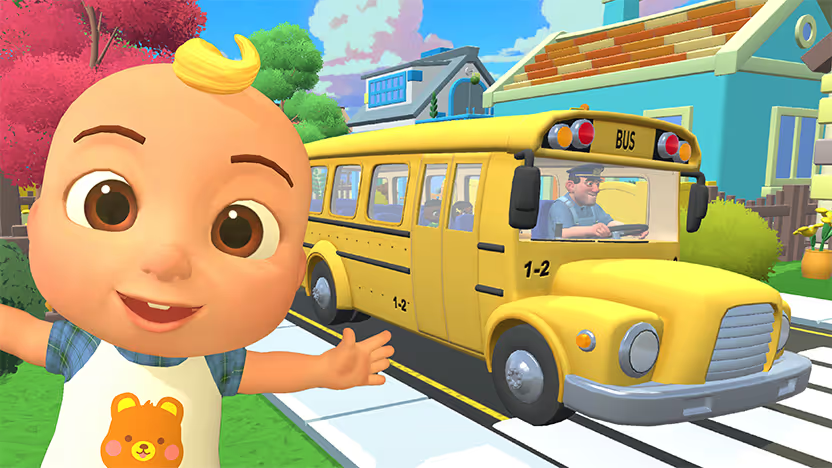
- CoComelon: Sing & Play with JJ gives toddlers aged 2–4 their own turn with familiar songs and playful, voice-controlled activities between the grown-up rounds.
- Meme Supreme turns a lull between rounds into its own game, with the room voting on the funniest match for each scenario.
Want an easy way to carry your trivia lineup into a full family game night? Start a 7-day free trial and play Weekend on your smart TV.
FAQs
How many rounds should a trivia night have?
5–7 rounds usually work best for a trivia night. Any fewer, and the night ends before the room warms up, and any more starts to drag once people get restless. That range gives a slow-starting team enough time to close the gap.
How do I host a trivia night at home for a large group?
Large groups do best with teams of 4–6 people and a scoreboard everyone can see. Separate tables also help, since crosstalk between groups tends to spoil close answers before the reveal.
How do I host trivia for guests with different interests?
Rotating categories across music, pop culture, sports, movies, and general knowledge keeps guests with different interests engaged. A personal round built around inside jokes or shared history often gets the loudest reaction of the night.
What prize should I give trivia night winners?
A trivia night prize works best when it creates a story, not when it costs money. A goofy trophy, a paper crown, or the power to pick the next theme tends to get more mileage than an actual gift, since the bragging rights outlast the prize itself.
How can I get Weekend Games on my smart TV?
Weekend Games launches on Roku, Fire TV, LG smart TVs, and Samsung smart TVs after a quick app search and setup. Search "Weekend Games" on the device, install the app, and start a 7-day free trial to try Jeopardy!, Song Quiz, and the rest of the lineup right away.









.png)
%20(1).png)
%20(1).png)

Free for 7 days. Cancel anytime.


