

.avif)


Games for 3-year-olds at home look a little different from the toddler phase, because they can follow short, simple rules, remember simple steps, and lean into pretend play.
These games bring more structure and less pressure than “real” board games. Plus, they’re easy to start on even the busiest day.
Games for 3-year-olds at home: At a glance
1. CoComelon: Sing & Play with JJ on Weekend
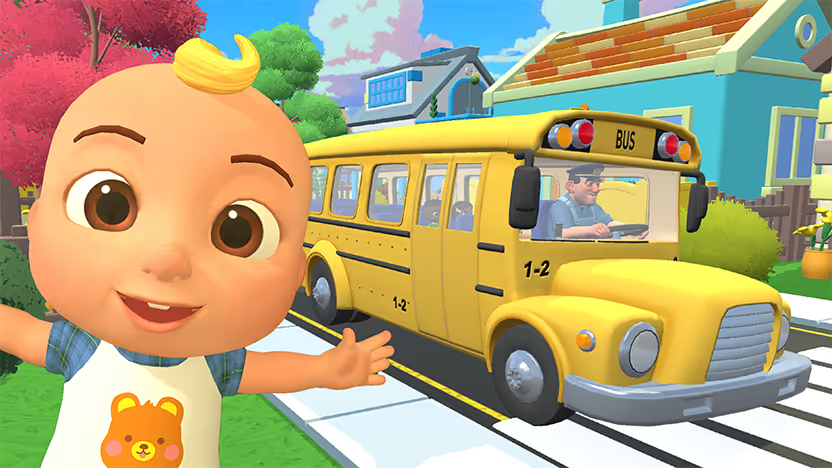
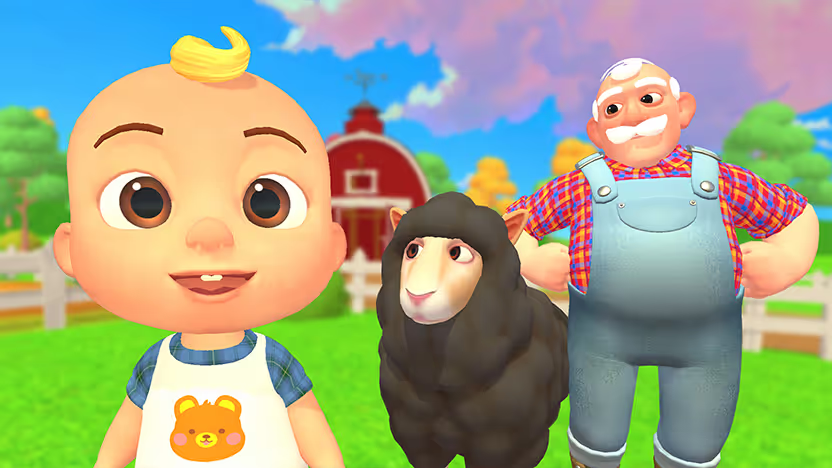
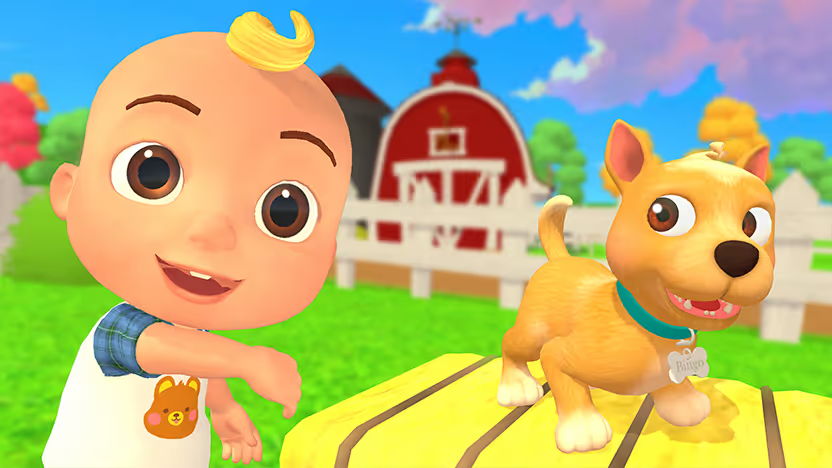
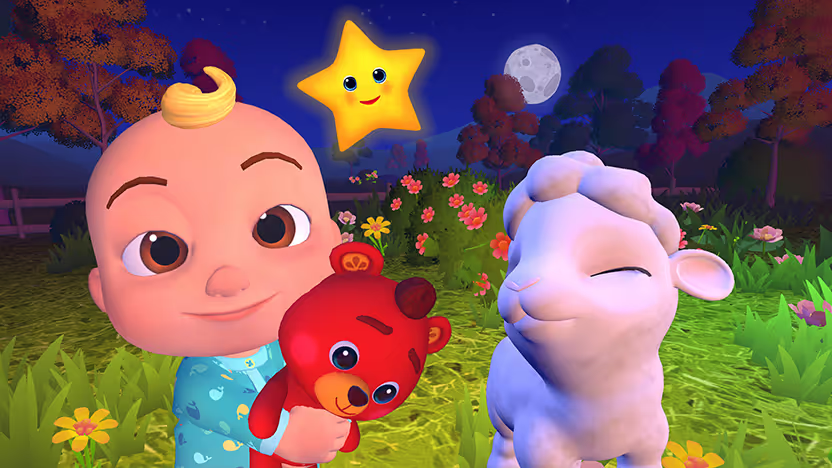
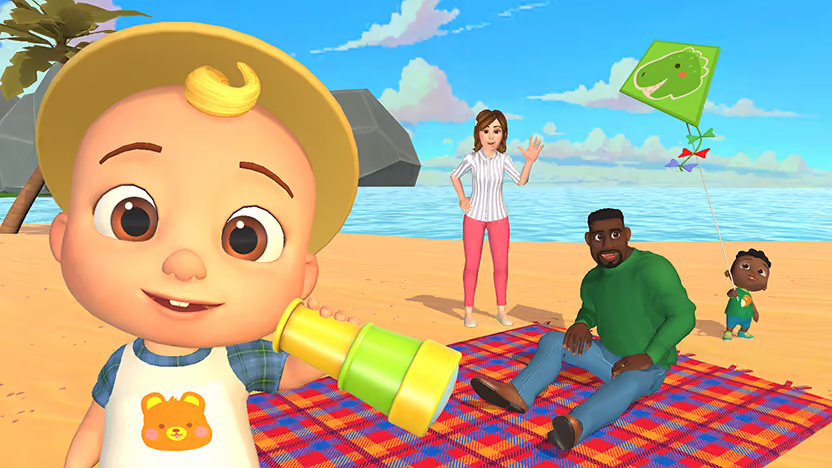
What it does: Turns your smart TV into a playful CoComelon experience where your 3‑year‑old sings, talks, and moves with JJ.
Best for: Kids who learn best through music, repetition, and copying what they see.
When I turned on CoComelon: Sing & Play with JJ for my 3‑year‑old, he stopped just watching and started joining in.
He shouted answers back to JJ, tried to remember what came next, and quickly turned Wheels on the Bus, BINGO, and Tiny Clues into real practice in rhythm, letters, shapes, and listening.
Key strengths for preschoolers
- Encourages active singing, talking, and responding
- Uses characters they already trust to gently introduce letters, colors, and simple rules
- Runs right on supported smart TVs, so starting a quick, interactive session is easy
Bottom line
CoComelon: Sing & Play with JJ keeps its place in my list of activities for 3-year-olds because it reliably turns into fun, confident little learning bursts.
{{cta-cocomelon}}
2. Shape Jump Path
What it does: Turns your floor into a path of taped shapes your child jumps, hops, or steps through in order.
Best for: Movers who enjoy following paths and copying your actions.
The first time I set up Shape Jump Path, I wasn’t sure if my 3‑year‑old would care about the shapes or just run through. I taped circles, squares, and triangles on the floor and called out, “Jump on the circle, then stomp on the square.”
Within minutes, they were shouting their own instructions back at me, turning it into a game we built together. It felt like Simon Says, but with shapes doing half the teaching.
Key strengths for preschoolers
- Mixes movement with basic shape recognition and simple sequencing
- Lets them try giving you instructions, not just following yours
- Easy to reset with new paths or new shapes on different days
Bottom line
Shape Jump Path earns a spot on my list of games for 3-year-olds at home because it sneaks early geometry and listening skills into a game that just feels like hopping around.
3. Color Shop
What it does: Turns pretend store play into a color‑sorting and counting game with “money” and simple orders.
Best for: Kids who love pretend play and copying how adults shop.
Color Shop started the day my 3‑year‑old kept asking to “buy” things from the pantry. I grabbed a few colored bins, some play or real coins, and turned the living room into a tiny store.
I’d say, “I’d like three red fruits, please,” and watch them hunt, count, and proudly deliver the order. It turned out that putting on a silly shopkeeper voice made the whole thing even more irresistible.
Key strengths for preschoolers
- Builds counting and color recognition inside pretend play they already love
- Gives them a chance to handle “money” in a zero‑stress way
- Easy to flip roles so they practice both asking and answering
Bottom line
Color Shop stays in my regular rotation of games for 3-year-olds at home because it blends early math and social skills into a game that feels like real‑life fun.
4. Laundry Basket Target Toss
What it does: Uses baskets or boxes as different “targets” with simple point values.
Best for: High‑energy kids who like throwing and counting.
Laundry Basket Target Toss happened when my 3‑year‑old outgrew plain sock‑toss and wanted “real points.” I set up two baskets with different distances and said, “Close basket is one point, far basket is two.”
Pretty soon they were choosing their own throws, cheering for every score, and helping track who had more points with fingers and blocks. It felt like leveling up from toddler tossing to preschool “sports.”
Key strengths for preschoolers
- Builds aiming skills with a little friendly competition
- Introduces basic scoring and comparing “more” and “less”
- Easy to adapt for siblings or grown‑ups without changing the core rules
Bottom line
Laundry Basket Target Toss deserves a place among games for 3-year-olds at home because it turns random throwing into a simple, satisfying game with just enough math.
5. Story Card Remix
What it does: Uses picture cards to build stories with a beginning, middle, and end.
Best for: Chatty kids and big imaginations.
Story Card Remix started when my 3‑year‑old refused to read the same book “the normal way” for the tenth time. I pulled some picture cards, laid out three, and labeled them “start, middle, end.”
We told the story together, then swapped just the middle card. Hearing how wildly the story changed with one new card gave both of us the giggles, and I could see them starting to grasp how stories have moving parts.
Key strengths for preschoolers
- Grows storytelling skills beyond “and then, and then”
- Encourages flexible thinking when one card changes the whole story
- Makes it easy for shy kids to participate using sounds or short phrases
Bottom line
Story Card Remix stays one of my favorite games for 3-year-olds at home because it turns simple pictures into endless stories that feel brand‑new every time.
6. Kitchen Band Rhythm Game
What it does: Uses kitchen “instruments” to copy and create rhythm patterns.
Best for: Music‑obsessed preschoolers who love making noise.
Kitchen Band Rhythm Game kicked off when my 3‑year‑old started drumming on everything in reach. Instead of shutting it down, I grabbed a couple of safe “instruments” and said, “Copy my pattern.”
We started with tap‑tap‑pause, then added clap‑tap‑tap, and soon they were inventing patterns for me. The moment they tried to hold back a hit for the “pause” was when I saw self‑control starting to click.
Key strengths for preschoolers
- Builds rhythm and pattern recognition in a super concrete way
- Gives them a safe structure for loud play and quiet pauses
- Lets them feel powerful by making patterns the grown‑ups follow
Bottom line
Kitchen Band Rhythm Game earns its place among games for 3-year-olds at home because it transforms random banging into a real skill‑building music session.
7. Treasure Map Hunt
What it does: Uses a simple hand‑drawn “map” to lead your child to hidden objects.
Best for: Curious explorers who love searching and solving clues.
Treasure Map Hunt started the day my 3‑year‑old announced they were a pirate and needed “real treasure.”
I drew a basic map of our living room with big, recognizable shapes and marked an X. We followed the map together, checking off each landmark until they found a small toy or snack at the end. Watching them compare map to room showed me just how ready they were for early problem‑solving.
Key strengths for preschoolers
- Introduces interpreting simple visual “maps” and symbols
- Gives them a clear, exciting goal to work toward
- Easy to scale difficulty up or down with more or fewer steps
Bottom line
Treasure Map Hunt earns a spot in my games for 3-year-olds at home because it turns everyday spaces into tiny adventures that feel like big discoveries.
8. Pattern Train Builders
What it does: Uses blocks, cars, or tokens to build repeating color or shape patterns.
Best for: Kids who naturally line up toys and “organize” things.
Pattern Train Builders happened when I noticed my 3‑year‑old lining cars in a perfect row over and over. I leaned into it by starting a “train” of red‑blue‑red‑blue cars and asking what came next.
They filled in the pattern and then started inventing their own, proudly showing off “red‑red‑yellow‑red‑red‑yellow.” It felt like unlocking the math hiding inside their favorite habit.
Key strengths for preschoolers
- Strengthens pattern recognition and prediction in a playful way
- Gives them control over how long or complex the “train” gets
- Works with almost any small toys you already own
Bottom line
Pattern Train Builders belongs on any list of games for 3-year-olds at home because it quietly turns lining things up into early math thinking.
9. Helper Level‑Up (Chore Missions)
What it does: Turns real chores into “levels” your child can complete and “unlock.”
Best for: Kids who want to do what you’re doing and feel like big kids.
Helper Level‑Up came from realizing my 3‑year‑old wanted more than just pretend help. I wrote down tiny tasks like “match socks,” “wipe the table edge,” and “water one plant,” then called them “levels.”
Every time they finished a level, we celebrated and sometimes added a sticker to a simple chart. Suddenly chores stopped being interruptions and became mini-achievements.
Key strengths for preschoolers
- Builds independence with tasks that actually matter at home
- Helps them understand sequences like “we clear, then we wipe”
- Gives you a shared language for effort: “You just leveled up your helper skills.”
Bottom line
Helper Level‑Up earns its place in my games for 3-year-olds at home because it makes them feel capable while you actually get things done.
Ready to go from preschool play to full game night?
If you want games for 3-year-olds at home that actually start fast, CoComelon: Sing & Play with JJ on Weekend already checks a lot of boxes. You get interactive songs, simple prompts, and a 3‑year‑old who feels like JJ is playing with them.
The same platform that runs CoComelon: Sing & Play with JJ can flip into full game‑show energy without extra hardware or stacks of boxes. Your TV becomes the one place everyone goes when they want to play.
Games to expect from Weekend:
- A classic round of Jeopardy! puts everyone in clue‑and‑question mode, where quick thinking and random knowledge finally pay off.
- In Song Quiz, you race to name songs and artists, and it almost always turns into a loud, competitive sing‑along.
- With Wheel of Fortune, you call letters, solve puzzles, and feel that familiar rush when the answer clicks.
- With Wit’s End, you speak your actions out loud and watch a live, chaotic, story‑driven adventure unfold around your group.
- A round of Karaoke (on Roku) hands over the spotlight so everyone can take a turn and try to top the last performance.
- Playing 20 Questions (on Roku) pushes your group to think sharper, asking yes‑or‑no questions to zero in on the answer.
From CoComelon: Sing & Play with JJ to Karaoke, take the 7‑day free trial of Weekend for a spin. Host a party, jump into some trivia, and make the Weekend app a permanent part of your family gatherings.
FAQs
What are the best games for 3-year-olds on Weekend?
The best games for 3-year-olds on Weekend are the mini-games on CoComelon: Sing & Play with JJ, because they combine songs, prompts, and simple actions my preschooler understands right away.
Is Weekend actually good for both preschoolers and adults?
Yes, Weekend is actually good for both preschoolers and adults because my 3-year-old gets CoComelon playtime, and later we switch to Jeopardy!, Song Quiz, or Wheel of Fortune with no extra setup.
How can I get the Weekend app on my smart TV?
You can get the Weekend Games app on your smart TV by opening the app store, searching “Weekend Games,” installing it, and signing in; my first game started in under a minute.
Can I use Weekend for learning, not just entertainment?
Absolutely! You can use Weekend for learning, not just entertainment, because CoComelon: Sing & Play with JJ focuses on letters, shapes, and listening, while Jeopardy! and Song Quiz’s trivia and Wheel of Fortune word games stretch older kids and grown‑ups too.








.png)
.png)
.png)

Free for 7 days. Cancel anytime.


