

.avif)

.avif)
After my last Fable run, I wanted more worlds that let me play a charming hero, a menace, or something in between. These 5 games like Fable mix playful fantasy, real choices, and worlds that react when you poke at them.
5 best games like Fable: At a glance
Note: Pricing and platform details change frequently. Always confirm before you purchase.
Why look for games like Fable?
Fable works because it doesn’t treat heroism as a straight line. You kick chickens, propose to strangers, decide whether to save the village or cash in the reward, and the world reacts in ways that feel playful rather than purely grim.
It’s light enough to be funny, but still serious enough that your choices can make you proud or slightly ashamed of your character.
Once you’ve played through Fable’s arcs and experimented with halos versus horns, though, you might want new places to test that same “what kind of hero am I?” feeling.
Games like Fable tend to share a few traits:
- Colorful worlds
- Visible consequences
- Space for you to create your own character
- A chance to lean into a particular role
Some keep that focus, like Wit's End, which turns it into a DnD session on the big screen, fantasy night where your real-life group becomes the party.
TL;DR: Which Fable-like game should you choose?
- Pick Kingdoms of Amalur: Re-Reckoning if you want fast action in a bright fantasy world that feels like Fable’s bigger cousin.
- Pick Wit's End on Weekend if you want a fantasy story night where your living room crew makes the calls together.
- Pick Oblivion if you want a classic open world with lots of room to wander and take odd quests.
- Pick GreedFall if you care about magic, factions, and moral choices with real consequences.
- Pick Overlord if you want to lean into comedy villainy and see villagers react to your bad decisions.
1. Wit's End (on Weekend Games)
Wit's End is the curveball pick. Rather than booting up another open-world RPG alone, you open the Weekend Games app on your TV and treat the living room like the pub in Bowerstone. It’s built for group play, not grinding stats.
Sessions feel like a hosted fantasy story where you describe your character, say what you want to do, and the game master turns those words into scenes tailored to your group. If you’ve ever joked with friends about “what our Fable characters would do,” Wit's End lets you actually run that out loud.
People toss in bold ideas, argue over whether to take the greedy path, and the story keeps reacting, so you get that same moral choice feeling. The big difference is that you do it all with actual voices instead of dialogue wheels.
Key features
- Built to highlight group decisions and banter
- Voice-driven, episodic fantasy adventures designed for one evening at a time
- Runs inside Weekend’s smart TV app alongside Jeopardy!, Wheel of Fortune, Song Quiz, and more
Pros
- Perfect for turning “What should we watch?” into “What does our party do?” on game night
- No rulebooks, class spreadsheets, or controller juggling to set up
- One Weekend subscription covers Wit's End plus trivia, music, and word games
Cons
- Much lighter on mechanical depth than a full single-player RPG
- Works best with at least a couple of people ready to have fun
Best for
- Fans of games like Fable and games like D&D who want a low-friction fantasy night with friends
- Families and roommates who enjoy improvised story decisions
- Anyone who wants their TV to host an AI RPG-style story instead of just another show
Pricing
Wit’s End is available through the Weekend Games app on LG, Samsung, and Fire TVs with a 7-day free trial, then a $12.99/month subscription (includes all supported games).
{{cta-witsend}}
2. Kingdoms of Amalur: Re-Reckoning
Kingdoms of Amalur: Re-Reckoning is often described as the bridge between Fable and Skyrim, and that’s pretty accurate. The world is bright, the enemies are colorful, and the combat feels like an action game layered on top of an RPG.
You’re playing a “Fateless” hero who can break destiny, so the story leans into the idea that maybe you don’t have to follow the script. Coming from Fable, the art style and tone feel familiar with whimsical landscapes, exaggerated armor, and magic that looks fun instead of dreary.
The big difference is that fights are faster and more combo-heavy. You’re dodging, weaving, and chaining attacks, but still making build choices and picking how you present yourself to factions.
Key features
- Action-heavy combat with dodge, block, and flashy abilities
- Flexible destinies (classes) that let you mix melee, magic, and stealth
- Large fantasy world with quests, factions, and dungeons
Pros
- Satisfying combat if you like responsive controls
- Bright, Fable-adjacent art style
- Plenty of room to create your own character and lean into a playstyle
Cons
- Story and characters are less sharp than Fable’s best jokes and twists
- Some content loops can feel MMO-like over time
Best for
- Players who want games like Fable but with more kinetic combat
- People who enjoy building a hero and experimenting with different roles
- Fans who want something between cozy fantasy and deeper RPG systems
Pricing
Kingdoms of Amalur: Re-Reckoning costs around $39.99 on modern platforms, with discounts.
3. The Elder Scrolls IV: Oblivion
Oblivion feels like the older cousin of Fable that takes the same “be a hero, explore a kingdom” setup and hands you more freedom. You slip into a main quest about closing world-ending gates, then wander off to join guilds, rob houses, and solve strange side stories.
When I replayed it after Fable, the charm came from how often the game lets me stray.
I could join the Thieves Guild, become a mage, or treat the main quest like background noise. I still cared about my character’s choices because factions and NPCs responded when I sided with one group or got caught doing something shady.
Key features
- Large open world with a central crisis and many side questlines
- Guilds and factions that react to your actions
- Magic, stealth, and melee builds with room for hybrid characters
Pros
- Strong sense of freedom and discovery
- Plenty of quest variety, from serious arcs to odd little stories
- Good fit if you like classic fantasy with a flexible main character
Cons
- Combat and interface feel dated compared to newer RPGs
- Visuals need patience if you’re used to modern art direction
Best for
- Players who want games like Fable but with more world to roam
- Fans who enjoy creating their own character rather than following a fixed script
- People willing to trade polish for a large, dense fantasy map
Pricing
The Elder Scrolls IV: Oblivion costs under $19.99 in current stores, or the game comes bundled with subscriptions. Note that The Elder Scrolls IV: Oblivion Remastered costs $49.99.
4. GreedFall
GreedFall takes Fable’s idea of choices and pushes it into a mix of gunpowder, magic, and colonial politics. You land on a mysterious island, meet native factions and foreign powers, then start picking sides while you chase a cure for a spreading illness.
I liked how often the game asks, “Who are you really with?” Quests regularly give you multiple outcomes based on how you talk, who you support, and whether you push for force or diplomacy. Companions comment on your decisions, and the ending reflects the path you built over time.
Key features
- Company-based fantasy RPG with firearms, magic, and melee
- Strong faction system where your choices shape relationships and outcomes
- Companion characters who respond to your stance and actions
Pros
- Interesting world that blends fantasy and 17th-century flavor
- Lots of quests with multiple possible resolutions
- Good mix of exploration, combat, and dialogue
Cons
- Budget shows in animation and some systems
- Tone stays serious, so you don’t get Fable-style silliness
Best for
- Players who like Fable’s moral choices and want higher stakes
- Fans of games like Dragon Age who enjoy juggling factions
- People who don’t mind a few rough edges in exchange for strong ideas
Pricing
GreedFall costs between $34.99 and $49.99, with steady discounts on PC and consoles.
5. Overlord
Overlord feels like someone asked, “What if the Fable hero gave up and leaned into being the villain?” You control an evil overlord and a horde of minions, then decide how cruel or “less cruel” you want to be to the people in your path.
When I played it, the fun came from watching villagers react as my corruption level climbed. The game gives you chances to spare or wreck places, and those decisions change how the world sees you.
The humor stays sharp, and the whole thing feels like a send-up of fantasy tropes, including the kind of morality systems Fable popularized.
Key features
- Third-person action with RTS-style minion control
- Morality choices that affect your look and how NPCs respond
- Fantasy world built around satire and parody
Pros
- Strong comedic tone that fans of Fable usually appreciate
- Clear feedback when you pick generous or cruel options
- Shorter, focused experience compared to huge open-world RPGs
Cons
- Older visuals and menus
- Less character build depth than full-scale RPGs
Best for
- Players who loved Fable’s mischief and want to push that further
- Fans who like the idea of playing an outright villain
- People who want something funny and sharp between longer campaigns
Pricing
Overlord costs between $4.99 and $29.99, depending on where you buy it and whether it’s sold as a classic bundle for PC and older consoles.
How to pick the right Fable-like game
When you choose what to play after Fable, a few simple questions help.
Do you want solo runs or group nights?
If you mostly play alone, Kingdoms of Amalur, Oblivion, GreedFall, and Overlord fit that pattern. If you want to share the experience with friends or family, you can use Wit's End on Weekend for living-room sessions, and although solo play is available, it works best when you treat it like a group story instead of a single-player grind.
Do you care more about combat or choices?
Kingdoms of Amalur and Overlord feel great when you’re in fights and set pieces. GreedFall leans harder into decisions and consequences. Oblivion splits the difference by giving you a wide map and plenty of freedom. Wit's End keeps mechanics light and pushes your group’s choices to the front.
Do you want to create your own character or step into a role?
Amalur, Oblivion, and GreedFall let you build a character and define who you are. Overlord hands you a clear role and lets you tune how corrupt you become.
Wit's End lets you describe a persona and see how the game master responds, which scratches that “create your own character” itch in a more conversational way.
Let your TV host the next fantasy tale
Scrolling through menus and replaying the same save file only goes so far. With Weekend on a smart TV, the screen can act like the next village square, ready for quests, arguments, and quick competitions.
Wit's End turns the living room into a shared fantasy story. Players talk through who they are, what they try, and where the party heads next, while a voice-acted game master builds scenes around every decision.
From there, Weekend gives game night a rhythm that matches the group:
- Jeopardy! when everyone wants to see who actually knows the most random facts.
- Song Quiz when the room feels more like singing and guessing than swinging swords.
- Wheel of Fortune when a shared word puzzle sounds better than another boss.
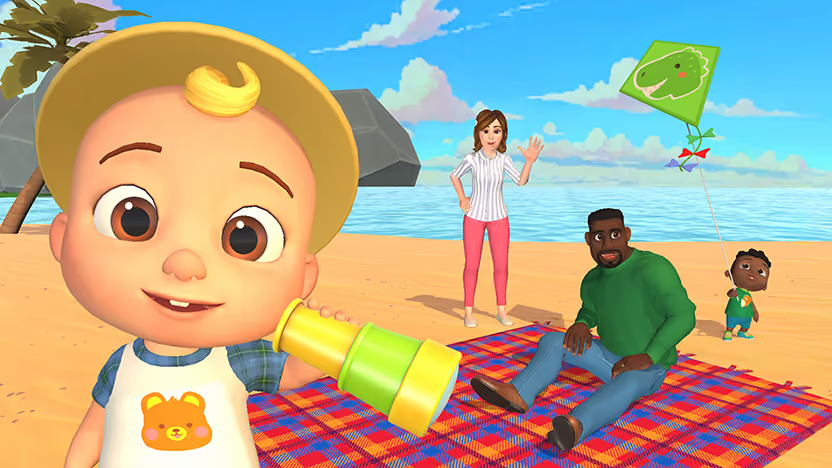
- CoComelon: Sing & Play with JJ when the night needs something educational and entertaining for both kids and families alike.
- Sketchy AF turns party nights into fast, loud guess-fests as the TV draws each doodle one stroke at a time.
- Spot On turns geography into a running joke, with globe-spinning clues and guesses that land anywhere from perfect to painfully wrong.
Weekend keeps all of that on one app, with voice controls and a free 7‑day trial on Fire TV, Samsung, and LG. Pick Wit's End to set the story, then let the group decide whether the night stays in fantasy or drifts into trivia, music, and word games.
FAQs
What’s the best game like Fable to try first?
The best game like Fable depends on your mood. I pick Kingdoms of Amalur when I want fast, colorful combat and Wit's End on Weekend when I want a fantasy night that feels closer to friends at a table than a solo save file.
Can I play anything Fable-like with friends on my smart TV without a console?
Yes, you can play something Fable-like without the need for a console by running Wit's End on the Weekend app. I use it on my smart TV when I want the group to make decisions out loud and watch the game master turn our choices into scenes.
Does Weekend offer more than Wit's End for game night?
Yes, Weekend offers more than Wit's End for game night, including Jeopardy!, Wheel of Fortune, Song Quiz, Karaoke (on Roku), and 20 Questions (on Roku). I usually start with a Wit's End quest, then switch into trivia or music when people want to compete instead of keep roleplaying.
Is Wit's End worth it if I mostly play single-player RPGs like Fable?
Yes, Wit's End is worth a shot even if you mostly play single-player RPGs like Fable. I keep my solo runs for quiet evenings and save Wit's End for nights when I’d rather hear my friends argue over what our hero does next.
How do I actually get Weekend on my smart TV?
To get Weekend on my smart TV, I open the TV’s app store, search for “Weekend Games,” and install it. After that, I move it to the front row so Wit's End, Jeopardy!, and Song Quiz sit one click away whenever somebody says, “Let’s play something, not just watch something.”








.png)
%20(1).png)
%20(1).png)

Free for 7 days. Cancel anytime.


