

.avif)

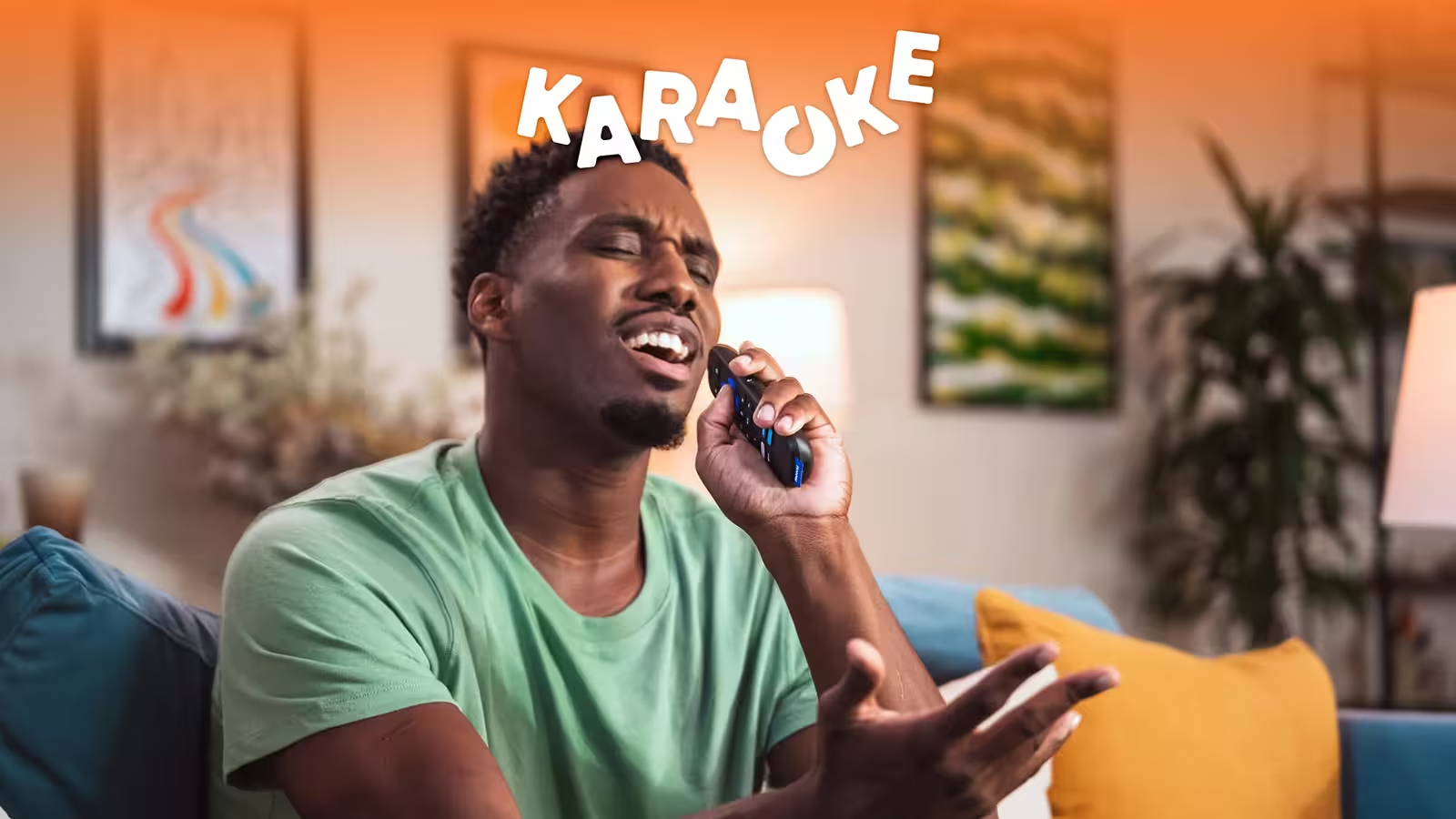
After hosting more than 20 karaoke nights, I've learned that the songs matter less than the sequence. The wrong game at the wrong moment kills a room. The right one turns your shyest guests into the last people to leave. These are the 10 karaoke party games I reach for at every stage of the night; all powered by Weekend's Karaoke and Song Quiz.
Karaoke party games: At a glance
Weekend: The Tool That Makes All of This Work
Get Weekend’s Karaoke up and running on your smart TV before guests arrive. Download the Weekend app on Roku, use your TV remote or a paired smartphone as the mic, and you're in. Thousands of tracks, on-screen lyrics, real-time pitch scoring.
The scoring changes the room. People stop being polite and start actually competing. Setup takes 3 minutes, no extra equipment needed.
1. Song Quiz
What it does: Plays short clips of songs and challenges everyone to name the title and artist first, which almost always ends in the group singing along anyway.
Who it's for: Music fans, nostalgia seekers, and anyone who has said “I know this song, I swear” about 5 seconds too late.
I load Song Quiz through the Weekend app, pick a decade, and within seconds, someone is shouting out an artist name with complete conviction. By the third clip, the guest who swore they weren't “a music person” is the loudest one in the room.
Key features
- Decade and genre selection so clips fit the crowd; mixed is the safest default.
- Voice-powered answers on Roku, Fire TV, Samsung, and LG through the Weekend app.
- Switching to it from any other Weekend game takes seconds.
Pros
- Triggers stories nobody planned on sharing, turning trivia into real conversation.
- No singing required, which is exactly right for the first 20 minutes.
Cons
- Gets loud fast. I keep an eye on the clock out of respect for my neighbors.
- Single-era settings can leave guests behind. I go with mixed and adjust from there.
Pricing
7-day free trial, then $12.99 per month. The subscription covers the full Weekend library.
Bottom line
Song Quiz is my opener every time. It builds the energy karaoke needs without putting anyone on the spot before they're ready.
{{cta-songquiz}}
2. Music Charades
What it does: Players act out song titles in silence while the group races to guess within 60 seconds. No singing, no speaking.
Who it's for: Anyone still hovering near the snack table, deciding whether they're committing to the night.
I write song titles on slips of paper and fold them into a bowl. The best round I've hosted involved someone spending 45 seconds acting out “Don't Stop Me Now” with increasing desperation. The room had guessed it at second 12. Nobody told him.
How to play
- The actor draws a title and performs silently for 60 seconds. A correct guess earns a point for both the actor and the guesser.
- Seed the bowl with a few universally known titles to guarantee at least one easy win per round.
- For a harder mode: act out the music video instead of just the title.
Pros
- Zero cost, zero setup; everything you need is already in your desk or kitchen drawers.
- Gets people moving and making eye contact, which dissolves awkwardness fast.
Cons
- Niche song choices leave the room blank. A few crowd-pleasing titles in the bowl fix this.
- I keep a visible countdown on my phone so nobody argues the buzzer.
Bottom line
Music Charades bridges “everyone's on their phones” and “everyone's ready to do something embarrassing.” It gets there faster than you'd expect.
3. Blind Singer
What it does: One person sings in a character voice while everyone else faces away and tries to guess who's performing.
Who it's for: Groups who need comic relief before anyone's brave enough to sing seriously.
Everyone faces away from the stage. The singer picks a character voice (opera, chipmunk, Batman) and performs 30 seconds of anything. Singer scores a point if nobody guesses correctly; the first correct guesser scores otherwise. I've had rounds where someone's chipmunk voice was more recognizable than their speaking voice.
Pros
- Even reluctant singers will go; it's a character, not their real voice.
- Produces immediate, genuine laughter, which is the entire goal at this stage.
Cons
- Some guests will perform for a full 3 minutes. I set a hard 30-second cutoff and hold it.
- Distinctive voices get guessed instantly. I follow them up right away to keep the pacing fair.
Bottom line
Blind Singer gets the room singing before anyone has consciously decided to sing. By the time it's over, the mic doesn't seem scary anymore.
4. Singer Roulette
What it does: Names go into a bowl. Whoever gets drawn picks any song and sings it. Repeat until everyone's gone once.
Who it's for: Groups where the same 3 people dominate, and 2 others are pretending to be fascinated by the snacks.
Nobody volunteers, and nobody gets skipped. The bowl decides. The twist that makes it genuinely funny: a second bowl with genre assignments drawn simultaneously, so Maya ends up with Disney and James gets '90s boy bands whether he likes it or not.
Pros
- Removes the social math of who goes next. The bowl takes the blame, not the host.
- Works with any group size since song choice is fully open.
Cons
- Without the theme bowl, it can feel flat. I almost always use both.
- If someone freezes, I let them swap for a theme challenge instead. Participation over perfection.
Bottom line
Singer Roulette is the fairest game on this list. It’s not the loudest, but it’s the one that makes sure nobody goes home having never touched the mic.
5. Song Roulette
What it does: Everyone writes a song title and adds it to the bowl. Whoever draws it has to sing it — including people who wrote songs they don't actually know.
Who it's for: Groups with strong music opinions who need someone else to make the decision for them.
Draw a song, sing it, accept your fate. A second wild-card bowl, like “opera style,” “robot voice,” “slow motion only,” keeps the format from going flat. The person whose submitted song got the biggest crowd reaction earns a bonus point.
Pros
- The crowd-sourced setlist means at least one person loves every song, keeping the stakes personal.
- The wild-card bowl makes every round feel new without any extra setup.
Cons
- Someone always writes something wildly obscure. I try to get the known titles first.
- I pull used wild cards rather than replacing them; drawing the same instruction twice deflates the fun.
Bottom line
Song Roulette is the most democratic game on this list. Everyone builds the setlist, so everyone's invested in the result.
6. Don't Forget the Lyrics
What it does: Song lyrics are printed with random words blanked out. When the music hits the gap, the first person to shout the missing word scores a point.
Who it's for: Groups who want real competition without anyone performing solo; everyone plays every round at once.
I print 5 to 7 lyric sheets with 8 to 10 blanks each. Blanking full phrases raises the stakes. Making people sing the blank instead of just saying it raises the stakes further. Running the track through Weekend’s Karaoke puts the real lyrics on screen after each gap. No arguments about the actual words.
Pros
- Everyone plays simultaneously. No waiting for turns, no losing the room between performances.
- Scoring is immediate and objective, which nearly eliminates the “I said it first” argument.
Cons
- Prep takes 15 minutes. I build sheets in advance and reuse them across multiple nights.
- I keep a notoriously mumbled song in the rotation on purpose and accept the chaos.
Bottom line
Don't Forget the Lyrics is the most reliably competitive game here that doesn't require anyone to perform solo.
7. Battle of the Duets
What it does: Pairs perform together in bracket-style elimination. The crowd votes after each round. The last pair standing wins.
Who it's for: Mid-party groups with enough momentum to handle real competition and enough people to fill a bracket.
I assign pairs randomly, set a theme, and run it through Weekend's Karaoke so scoring is live. The most memorable version: require each pair to sing a song neither fully knows. The partner who does know it coaches the other one, live, in front of everyone. I've never done this without the room losing it.
Pros
- Sharing the spotlight lowers individual pressure; guests who won't solo will absolutely duet.
- Bracket format gives the night a clear finale and keeps energy building instead of plateauing.
Cons
- I frame scoring around entertainment value rather than technical ability, which keeps uneven pairs fun.
- I cap brackets at 4 pairs for a 2-hour party. Larger groups need more time than people expect.
Bottom line
Battle of the Duets is the game I reach for when the room wants to compete, but I want people connecting rather than going head-to-head alone.
8. Karaoke Musical Chairs
What it does: Players walk around chairs while someone sings. The singer stops mid-verse without warning. Everyone scrambles. One person is out per round.
Who it's for: Anyone still standing at the 3-hour mark, especially the person who said they were “just going to sit down for a minute.”
One fewer chair than players. Someone starts singing through Weekend’s Karaoke and stops whenever they want, mid-word if they feel like it. The eliminated player picks the next song and earns the right to stop it at the worst possible moment.
Pros
- Gets people physically moving, which resets the room in a way no sitting-down game can.
- Eliminated players stay engaged as stop-controllers, so nobody ends up in the corner.
Cons
- Clear the coffee table and anything breakable first. Non-negotiable.
- Guests with mobility limitations sit this out. I give them the official scorekeeper role, which comes with genuine authority.
Bottom line
Karaoke Musical Chairs is the only game on this list that doubles as a full room reset. When the night needs a jolt, this is the jolt.
{{cta-karaoke}}
9. Misheard Lyrics
What it does: Everyone writes fake “misheard” versions of well-known lyrics; close enough to sound plausible, different enough to be completely wrong. The crowd votes on the most convincing.
Who it's for: The late-night core group comfortable enough to deliver a wrong lyric with a completely straight face.
I pick a song everyone knows, give the group 5 minutes, and read entries aloud. Whoever sings their fake version with full sincerity (no breaking) usually wins regardless of how clever the lyric actually is. The most reliable chaos move: choose a song with notoriously mumbled lyrics and watch everyone's fake version become indistinguishable from the real one.
Pros
- No wrong answers; the worse the misheard lyric is, the funnier it gets. My group still quotes a Beyoncé entry from 2 years ago.
- Creative and collaborative; the results are quotable for weeks.
Cons
- Works best with smaller groups. Above 8 people, I split into 2 teams competing against each other.
- Move through entries quickly. Energy dips if readings drag.
Bottom line
Misheard Lyrics requires zero energy, and somehow, it produces the most memorable moments of the whole night.
10. Rewrite the Song Battle
What it does: Teams rewrite a song's lyrics (same melody, everything else changes) and perform their version for the crowd.
Who it's for: The creative, slightly chaotic end-of-night group that's been waiting all evening for permission to get weird.
Teams of 2 or 3 get 15 minutes and a song. The most effective version: give every team the same song and watch 5 completely different interpretations emerge. Assigning a theme sharpens it, like “turn this love song into a job interview” or “make this breakup anthem about tacos.” All team members perform together. The harmonizing attempts are mandatory and, reliably, the funniest part.
Pros
- Teams mean no one is stranded alone with a bad idea; there's always someone to save the rhyme scheme.
- Even a mediocre rewrite becomes entertaining with enough commitment from the performers.
Cons
- I cap performances at 90 seconds and vote immediately after, or competitive groups drag it out past the crowd's attention span.
- I watch the room and extend the writing time if something genuinely good is taking shape. 15 minutes can feel short.
Bottom line
Rewrite the Song Battle is the best closer I've found. It ends the night on something the group built together, which feels different from just singing one more song.
Which Game Should You Choose?
The sequence matters more than any individual game. Start with Song Quiz or Music Charades while people are still arriving. Move into Blind Singer and Singer Roulette once the first laughs have landed. Song Roulette, Don't Forget the Lyrics, and Battle of the Duets carry the middle. When the energy flatlines around hour 3, Karaoke Musical Chairs fixes it. Misheard Lyrics and Rewrite the Song Battle close things out for whoever's left.
My standard flow: Song Quiz to open → Singer or Song Roulette through the middle → Battle of the Duets as the main event → Karaoke Musical Chairs as the reset → Rewrite the Song Battle for the core group.
End before people want to leave. Parties that wrapped at 11 p.m. had everyone asking when we're doing this again. However, the ones that dragged past midnight got a different kind of energy entirely.
Keep the night going with Weekend
When the group needs a break from singing, the rest of Weekend’s library has you covered. Wheel of Fortune works well between karaoke rounds: teams work out puzzles without anyone performing. Guess the Emoji runs in 5-minute bursts with no explanation needed. Jeopardy! is the move when Battle of the Duets energy is still in the air, and the room needs somewhere to put it.
Weekend titles that pair well with a karaoke night:
- Karaoke (on Roku) brings real-time pitch scoring and thousands of tracks to your Roku TV.
- Song Quiz turns music recognition into a living-room competition nobody planned on.
- Wheel of Fortune delivers spin-and-solve word puzzles that pull in even the guests who say they hate trivia.
- Guess the Emoji (on Roku) keeps rounds fast, visual, and open to everyone in the group.
- Jeopardy! brings the classic quiz-show format home with authentic categories and clues.
We offer a 7-day free trial that unlocks our full game library on Roku, Fire TV, Samsung, and LG smart TVs.
FAQs
How many karaoke party games should I plan for one night?
You should plan for 3 to 4 karaoke party games for a night. That's enough to move through different energy levels without rushing any single game. A good flow is Song Quiz to open (15 minutes), Song Roulette or Singer Roulette through the middle (20–30 minutes), and Rewrite the Song Battle or Misheard Lyrics to close (30 minutes). More than 4 games usually means nobody fully gets into any of them.
What if nobody wants to sing first?
The easiest fix is starting with a game that doesn't require real singing. Blind Singer uses character voices, and Song Quiz has no singing at all. Both lower the barrier enough that someone always belts out a song by round 2. Once one person goes, the rest follow. I've never seen a group stay frozen past the second game.
Do I need expensive karaoke equipment?
No, you don’t need expensive equipment for karaoke party games. Weekend’s Karaoke runs on Roku with your TV remote or a paired smartphone as the mic. For DIY games like Song Roulette or Misheard Lyrics, all you need is paper, a bowl, and a phone to play the track. Effectively free if you already own a TV.
How do I keep energy up for a long night?
The key to keeping energy up is rotating between singing and non-singing games rather than playing karaoke straight through. Use Song Quiz or Karaoke Musical Chairs as breathers between heavier rounds, and save Misheard Lyrics and Rewrite the Song Battle for when the crowd has thinned. Four straight hours of a single format will kill the vibe.
What's the best game for competitive guests?
The best game for competitive guests is Weekend’s Karaoke, because it scores pitch in real time and the scoring mostly removes subjectivity. Battle of the Duets with bracket-style elimination is a strong second. Both give you a clear winner without relying on crowd voting, which is exactly what competitive guests need to stop arguing and start playing.










.png)
%20(1).png)
%20(1).png)

Free for 7 days. Cancel anytime.


