

.avif)

.avif)
Here’s exactly how I play DnD with AI on weeknights, then swap to Wit's End on Weekend when nobody wants to DM. You can steal this playbook, plug in your own group, and be rolling digital dice tonight.
3 ways to play DnD with AI: Quick overview
- AI as a full dungeon master
- AI as rules‑aware co‑DM
- AI as a live game master on TV, like Wit's End
Each one works for slightly different vibes and energy levels.
Method 1: Let AI run the whole game
You sit down, create your own character, and let an AI game master handle everything a human DM would. It narrates scenes, tracks the world, plays NPCs, and calls for rolls.
Modern AI RPG tools can run DnD‑like games with real rules knowledge and persistent memory. You pick your system or “DnD‑style” rules, type a short premise, then jump straight into roleplay.
A typical session for me looks like this:
- I pick a system or tag it as “D&D‑style fantasy”
- I create a level-3 character with a short backstory, personality, and one specific goal
- I tell the AI GM how lethal and how serious I want the tone
- I start in a small, concrete location, like a city gate or tavern, and talk in character
Because the AI tracks context, it remembers my allies, grudges, and hanging plot threads across sessions.
Use it when:
- You want to play solo or with one other person
- Nobody wants to prep maps, stat blocks, or NPCs
- You want to experiment with D&D-like games without rules lawyering every move
My favorite format is a “three‑scene” one‑shot. I tell the AI GM: “Short heist story, three main locations, D&D‑style, focus on character choices over combat.” It gives me a starting hook. I lean into character decisions, and the AI handles twists and consequences.
Method 2: Use AI as your co‑DM
You stay in charge as DM, and the AI acts as your assistant for encounters, NPC ideas, and rules lookups. This still feels like classic tabletop, just with less mental load. I usually keep an AI assistant open on another device and give it a tight prompt:
- System and level band
- Rough theme for tonight’s session
- Any recurring NPCs or plot threads it should keep in mind
Then I use it for fast, focused tasks:
- Generate 3 encounter ideas that fit my party’s level
- Draft dialogue for a key NPC in a specific tone
- Suggest magic item rewards that match my campaign themes
Plenty of AI tools for DnD support encounter building, backstory prompts, and rules‑aware suggestions so you spend more time playing and less time paging through books.
Use it when:
- You still enjoy DMing but hate prep
- Your group cares about “real” rules
- You like homebrew worlds but want help filling in the details
I’ll prep a session by asking for three escalating complications for a specific quest and a short monologue for one important NPC. During play, if the party goes sideways, I’ll quickly ask for a fitting random encounter or a location description that matches my region.
My players see effortless improv. I know I’ve got an invisible co‑DM catching my dropped balls.
Method 3: Play Wit's End with a live game master on smart TVs
Wit's End is an AI‑powered fantasy RPG you play on your TV. It acts like a live game master, listening to what you say, narrating in real time, and turning your choices into a voiced, improvised story. Everyone gets to create a character and jump in. Nobody has to DM or even hold a controller.
Wit's End uses a real‑time voice AI that combines narrative creativity with game mechanics. You speak to the game; it interprets your intent, keeps track of context, and responds with a unique quest each time you play. The result feels like a couch co‑op fantasy game where the “console” is an AI DM.
You play it on your TV through Weekend, which runs on mainstream smart TV platforms. You search for “Weekend,” fire up Wit's End, and game night starts right there in your living room.
Use it when:
- You want an AI roleplaying game that feels more like hanging out and less like managing a spreadsheet
- You’ve got a mix of D&D veterans and total newcomers
- Everyone’s tired, and nobody wants to run a character sheet or rulebook
On Friday, my group might do a crunchy, rules‑heavy online session. By Saturday night, no one wants to manage initiative or prep.
That’s when we switch on the TV, pick Wit's End, and just start talking. We still get to create our own characters and lean into roleplay, but the AI handles pacing, narration, and consequences while we stay on the couch. It feels like the low‑effort, high‑story version of D&D-like games.
{{cta-witsend}}
Choosing the right way to play
Here’s how I decide which route to take for a given night:
If I want control and crunchy rules, I lean on AI as co‑DM. If I want ease and vibes, I go straight to AI‑run games or Wit's End.
How to create your own character with AI (without losing the fun)
The fastest way to get more from AI RPG tools is to give them better characters to work with. AI loves clear goals, hooks, and flaws.
Here’s the character template I actually use:
- Concept in one line: “Cynical ex‑paladin who secretly still believes in redemption.”
- One strong motivation: “I need enough gold and reputation to reclaim my old order’s ruined temple.”
- Two personality traits: “Dry humor” and “protective of underdogs.”
- One tangible flaw: “Hates asking for help, even when badly hurt.”
- One signature move or habit: “Touches the broken holy symbol on their belt whenever they tell a lie.”
When you feed this kind of detail into an AI GM, it can weave scenes and NPC reactions around your character instead of producing generic fantasy filler.
On platforms with built‑in character builders inspired by DnD 5e, you can also auto‑generate stats and images after you define the core concept. I usually let the AI suggest a backstory, then tweak it so it matches the tone I want.
With Wit's End, I keep intros short and punchy since everything runs through your voice and the game master's live narration.
I’ll say something like: “I’m Lysa, a quick‑talking rogue who owes money to the wrong people and wants one big score.” The game master picks that up and turns it into concrete hooks in play.
Best practices for playing DnD with AI
These habits have made my AI RPG nights smoother and way more satisfying.
Give the AI a clear role
Decide whether you want it to be a full DM, a co‑DM, or a live game master. When I blur those roles, I get messy sessions. When I set expectations, the AI responds better, and my group knows how to engage.
Talk in character, think in plain language
When I speak to an AI GM, I say what my character does in first person or close third, but I keep my intentions clear. “I lean on the bar and quietly ask the barkeep about recent disappearances. I’m trying to sound casual, but I’m ready to bolt.” The AI can respond with better context when I show what I want from the scene.
Use short scenes instead of endless sandboxes
AI shines when you frame scenes with a clear goal or tension instead of wandering forever. I like “We sneak into the estate during the ball” instead of “We explore the city.” That helps with pacing and keeps games like D&D focused on story beats instead of filler.
Set tone and boundaries upfront
I tell the AI what tone I want: “light, pulpy, PG‑13, focus on banter.” Many AI GM tools respect those constraints and keep content aligned with your group. With Wit's End, you get a naturally approachable fantasy tone out of the box, which is ideal for mixed groups.
Embrace rulings over rules
Some AI GMs are pretty good at D&D rules. Others lean more cinematic.
I’ve had the best time when I treat AI as a “yes, and” engine that keeps things moving instead of a strict-rules lawyer. When it matters, I’ll override or clarify, especially when I’m using AI as co‑DM for a group that cares about system integrity.
Why Wit's End makes Weekend game night easy
You can only reschedule your “real” campaign, argue about who preps, and scroll past the same launchers so many times. Games like D&D promise epic quests, but when no one wants to DM or learn another VTT, even the best worlds start to feel locked behind logistics.
Weekend gives your smart TV a different job. Instead of another night of passive watching, it turns the room into a place where you actually play DnD with AI in a way that feels live, social, and low effort.
Wit's End brings the fantasy‑party feeling back. Players create their own characters, speak their choices out loud, and push the AI RPG forward together while a voice‑acted game master reacts to every decision.
Once the adventure winds down, Weekend keeps the night going with other games worth spinning up:
- With Jeopardy!, the quiz show arguments finally move from the couch to the screen, and your living room gets to prove who actually knows their stuff.
- When the night turns into “remember that song?” mayhem, Song Quiz cuts straight to short clips and asks everyone to shout the title and artist before the timer wins.
- On puzzle‑brain nights, Wheel of Fortune throws the board up on the TV so every consonant, vowel, and lucky spin turns into a loud, shared solve.
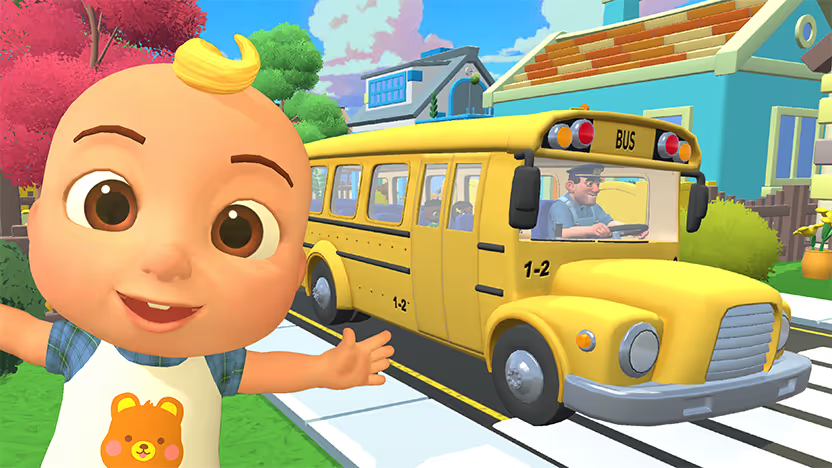
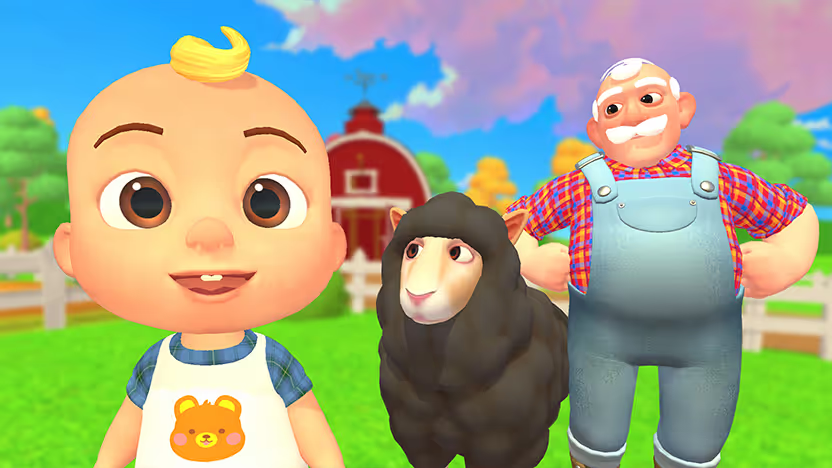
- For kid‑heavy evenings, CoComelon: Sing & Play with JJ keeps little ones singing, dancing, and copying JJ so adults can play along instead of just managing remotes.
- The moment someone says “karaoke?” Karaoke (on Roku) flips your TV into a giant lyric screen and gives the whole room an easy excuse to grab the next verse.
- When the volume’s already high, Sketchy AF slowly sketches out a mystery picture and dares everyone to shout out ridiculous guesses long before the drawing makes sense.
- On nights when everyone’s itching to travel, Spot On spins the map, tosses a clue, and turns every pin from “nailed it” to “wrong planet” into running jokes all night.
Weekend keeps everything in one app with simple voice controls and a free 7‑day trial on Roku, Fire TV, Samsung, and LG. That gives you a full week to run Wit's End as your AI‑run fantasy night, test every other game with your crew, and decide if it deserves a permanent spot in your Weekend rotation.
FAQs
How long does it take to set up an AI‑run game?
Setting up an AI‑run game on Weekend only takes a few minutes. You open the Weekend app on your smart TV, pick Wit's End, and follow the prompts. I usually go from couch to quest faster than we can pick snacks.
What’s the hardest part of using AI for DnD-like games?
The hardest part of using AI for DnD-like games is managing expectations. Weekend treats AI as a flexible game master, not a perfect human DM. When I lean into collaboration instead of perfection, our sessions stay fun and fast.
Do I need deep knowledge of the rules to play?
No, you don’t need deep rules knowledge to play on Weekend. Wit's End handles the AI RPG structure while you focus on story beats and choices. I only bring in detailed D&D rules when my group specifically wants that crunch.
Can I use Wit's End if my group is brand new?
Yes, you can absolutely use Wit's End if your group is brand new. Weekend runs the AI game master on the TV, so players just talk, decide, and react. I’ve used it to introduce friends who’ve never touched character sheets before.
What if someone in my group hates AI?
If someone in your group hates AI, Weekend still fits. You can keep classic tabletop nights and use Wit's End only when you’d otherwise cancel. Weekend also has an assortment of officially licensed party games, like Jeopardy! and Song Quiz, that your group can dive into instead.
How can I get the Weekend app on my smart TV?
To get the Weekend app on your smart TV, open the app store on Roku, Fire TV, Samsung, or LG and search for “Weekend.” I just installed it once, signed in, and now game night is always sitting on my home screen.










.png)
%20(1).png)
%20(1).png)

Free for 7 days. Cancel anytime.


