

.avif)


Some toddler shows can keep kids entertained, and some can help calm them down and teach them about emotional regulation. I'm a big fan of both. My kids are ages 2, 4, and 6, and I’ve watched all of these different types of shows with them over the past couple of years.
Learn about the shows that helped my kids pick up useful cues to calm down, and they’ve helped me assist them, too.
Here's my list, with what each show teaches, the age it suits, and where to stream it.
9 best shows that teach kids emotional regulation: TL;DR
- CoComelon: Best for younger toddlers who settle through repetition
- Daniel Tiger's Neighborhood: Best for direct calm-down songs a toddler can copy on the spot
- Bluey: Best for preschoolers working through frustration and repair
- Sesame Street: Best for named breathing and self-control skills, ages 2 to 5
- Stillwater: Best for a mindfulness wind-down before bed
- Frog and Toad: Best for naming worry and disappointment out loud
- Ms. Rachel: Best for babies learning first feelings words
- Puffin Rock: Best for sensitive kids who need a slower pace
- Trash Truck: Best for a calm, low-conflict wind-down
Why look for shows that teach emotional regulation?
Most kids' shows are entertaining, and that's great. But just like different types of play help shape your kids' mood and energy levels, shows can do the same thing.
Some cues can be really helpful
When my 4-year-old is upset, a long explanation from me rarely helps. A cue he already knows from a show, like a breathe-and-count song, gives him something simple to try.
Co-watching helps you remember how to calm them
I watch these shows along with my kids, and the calming strategies or stories can be helpful for me to learn and bring up with my kids.
The focus is the emotional skill
Plenty of good toddler shows focus on letters, numbers, and colors. The ones here focus on feelings skills instead, like calming down, waiting a turn, or naming an emotion. Both kinds can be helpful for kids.
Match the show to your child's age
A 2-year-old does best with slow speech and repetition, while a 6-year-old can follow a more complex storyline. I've listed out shows that cater to different needs and ages, so you can pick what works for your kids.
Which emotional-regulation show should you choose?
Choose CoComelon if your toddler is 2 to 3 and settles through repeated songs. Skip it if your preschooler wants more plot than melody.
Choose Daniel Tiger's Neighborhood if you want a calm-down song your toddler can hum back mid-meltdown. Skip it if your kid finds slow pacing dull next to busier shows.
Choose Bluey if your preschooler or older kid processes frustration through play and you'll watch along. Skip it on tired nights, since the fast pace and constant music can wind up sensitive kids.
Choose Sesame Street if you want named skills like belly breathing and waiting, across ages 2 to 5.
Choose Ms. Rachel if your child is a baby or young toddler building first words, feelings words included.
Choose Stillwater, Frog and Toad, Puffin Rock, or Trash Truck if you want a slow, low-conflict wind-down before bed, with mindfulness or feelings-naming layered in.
9 best shows that teach kids emotional regulation: Quick comparison
Note: Streaming homes change often. Always check where a show is available before you subscribe.
1. CoComelon
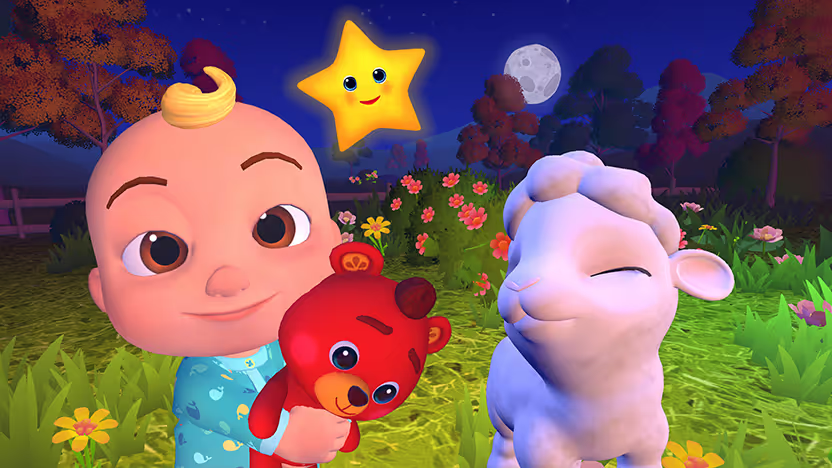
CoComelon helps to calm younger toddlers through repetition, tying a phrase to an everyday moment like a meal or bedtime.
CoComelon appears on many lists of the best educational shows for kids, and the repeat-heavy songs are what calm my 2-year-old.
The bedtime and clean-up songs give her a predictable pattern, and predictability is most of the battle with toddlers.
What it teaches
- Calming songs: Repetition gives anxious toddlers a predictable pattern
- Everyday routines: Meal, bath, and bedtime songs map to real transitions
- First feelings words: Simple emotion labels repeated until they stick
Pros
✅ Strong for toddlers who respond to predictable songs
✅ Ties calming phrases to meals and bedtime
✅ Easy to line specific songs up with your own routine
Cons
❌ Fast, catchy pace suits some kids more than others
❌ More song than plot, so older preschoolers may want a fuller story
Best for
- Younger toddlers, roughly 2 to 3 years old
- Parents building calm into daily transitions
- Kids who learn through repetition
Where to watch
Netflix and YouTube for now. The classic episodes move to Disney+ in January 2027, so check the platform before you subscribe. CoComelon Lane stays on Netflix.
When your child wants to sing and answer back, CoComelon: Sing & Play with JJ on Weekend Games puts the same songs in a game. It's on my list of the best apps for toddlers.
{{cta-cocomelon}}
2. Daniel Tiger's Neighborhood
Daniel Tiger's Neighborhood pairs a coping skill with a short song every episode, so a toddler leaves with a cue they can hum back.
When my 4-year-old is so mad he could roar, I sing the deep-breath-and-count-to-4 song, and it redirects him faster than anything I say in my own words.
A Texas Tech study found preschoolers who watched Daniel Tiger recognized emotions and showed more empathy than kids who didn't, but only when a parent discussed the episodes with them.
What it teaches
- Easy jingles to help kids learn good habits: Every lesson is paired with a song that helps kids remember what to do
- Naming feelings: Each episode labels an emotion, so the vocabulary sinks in
- Waiting: The short songs also model pausing before reacting
Pros
✅ Every song gives you a phrase to reuse the second a feeling spikes
✅ Relatable mix of characters and daily situations
✅ Short, simple episodes that are easy to follow
Cons
❌ Slower pace can feel flat next to busier shows
❌ The youngest toddlers may catch the song but miss the story
Best for
- Toddlers and preschoolers with big feelings
- Parents who will co-watch and reuse the cue
- Kids who respond to music over dialogue
Where to watch
Streams free on PBS Kids and the PBS Kids app, with more on the PBS Kids Amazon Channel and Hoopla.
3. Bluey
Bluey works big feelings through play, so a preschooler picks up repair and resilience inside a story.
In one episode, Bingo gets upset when part of a performance goes wrong, and the Heeler family helps her recover. It’s a simple coping tool or “checklist”: cry it out → pick yourself up → keep going. My 6-year-old caught that and started narrating her own recoveries.
What it teaches
- Handling frustration: Characters feel a setback fully before recovering
- Repair after conflict: Siblings and parents reconnect after a squabble
- Resilience: Do-overs model bouncing back without shame
Pros
✅ Strong across a wide age range, from 3 up
✅ Funny enough for adults, so co-watching is easy
✅ Sparks pretend play that continues after the show ends
Cons
❌ Some episodes aim at older emotions, so I skip a few on tired nights
❌ Faster pace and constant music can wind up sensitive kids, so I cap it at 2 to 3 episodes
Best for
- Preschoolers and older siblings
- Families who watch together
- Kids who process feelings through pretend play
Where to watch
Disney+, with clips on the official Bluey YouTube channel.
4. Sesame Street
This show has a special place in my heart because I grew up watching it too. The "Belly Breathe" song with Elmo gives my kids a breathing move they copy. Cookie Monster's "Me Want It (But Me Wait)" is a full lesson on waiting.
Each newer episode runs an 11-minute story on a well-being theme, easier to follow than the old segment-hopping format.
What it teaches
- Belly breathing: A named breathing song kids imitate
- Self-control and waiting: Cookie Monster models delaying a want
- Cooperation and patience: Recurring themes across episodes
Pros
✅ Named breathing and self-control songs kids actually copy
✅ Familiar characters make the skills feel warm, not preachy
✅ Works for a 2-year-old and a 5-year-old alike
Cons
❌ The huge back catalog can feel scattered without steering
❌ Newer episodes move faster than the older ones some parents prefer
Best for
- Ages 2 to 5
- Kids who respond to song-based skills
- Families who already know the characters
Where to watch
New episodes stream on Netflix worldwide and air the same day on PBS and the PBS Kids app in the U.S.
5. Stillwater
Stillwater is my pick when the kids are wound up. They close each episode with a calm practice that children can copy along.
The show follows a panda who helps 3 siblings handle everyday frustration through short mindfulness stories, based on Jon J. Muth's Zen Shorts books.
What it teaches
- Mindfulness: Short stories model staying present
- Breathing and grounding: Each episode ends with a practice
- Staying with a feeling: Characters pause instead of reacting
Pros
✅ Calmest show here, good right before bed
✅ Each episode models a breathing or grounding practice
✅ Slow pace helps overwhelmed kids settle
Cons
❌ Minimal songs, so music-first kids may want more
❌ Too slow to hold every toddler
Best for
- Kids who need help slowing down, roughly 4 and up
- Bedtime wind-downs
- Families drawn to mindfulness
Where to watch
Apple TV.
6. Frog and Toad
Frog and Toad name uncomfortable feelings out loud rather than rushing to fix them. Toad gets anxious, impatient, and disappointed, and the show labels those feelings rather than smoothing them over.
My 6-year-old related hard to Toad's worry, and putting a name to it helped her talk about her own. The friendship stays warm through disagreements, modeling how friends stay close after a squabble.
What it teaches
- Naming worry and disappointment: Feelings get labeled, not glossed
- Patience: Toad learns to wait through discomfort
- Accepting differences: Two friends stay close despite friction
Pros
✅ Names disappointment, worry, and impatience directly
✅ Slow, warm pace suits sensitive kids
✅ Short episodes fit before a nap
Cons
❌ Light on songs, so younger children may miss that
❌ More story than action, which some kids want
Best for
- Preschoolers, roughly 3 to 6
- Kids who may be more emotionally sensitive
- Pre-nap viewing
Where to watch
Apple TV.
7. Ms. Rachel (Songs for Littles)
Ms. Rachel speaks slowly, looks at the camera, and repeats simple feelings words until kids learn to copy them.
For my 2-year-old, hearing "sad" or "happy" said clearly and often is how she connects the word to the feeling.
She turns up in my roundup of shows like CoComelon for the same reason, since slow speech and heavy repetition are what young toddlers need to build first words.
What it teaches
- First feelings words: Clear, repeated labels for basic emotions
- Calm greetings: Slow, warm modeling of everyday interaction
- Gentle sharing: Simple prosocial cues for toddlers
Pros
✅ Excellent for speech and first feelings words
✅ Warm tone that invites babies to copy
✅ Easy to watch in short, calm sessions
Cons
❌ Simple visuals may not hook kids who want animation
❌ Feels more like a lesson than a story for some families
Best for
- Babies and young toddlers building first words
- Speech-focused parents
- Short, calm sessions
Where to watch
Free on YouTube and available on Netflix with a subscription.
8. Puffin Rock
Puffin Rock models patience and looking after a younger sibling. The show follows a young puffin named Oona who cares for her little brother Baba, with calm narration and a nature-filled setting.
The slow pace and steady tone are what I want on an overstimulated evening, and my kids grasp the tone more than any spelled-out rule.
What it teaches
- Patience: Slow-pacing of stories rewards waiting
- Gentleness: Calm narration models a soft approach
- Sibling care: Oona looks out for someone smaller
Pros
✅ Calming for sensitive or easily overwhelmed kids
✅ Models patience and sibling care without preaching
✅ Works as a wind-down before bed
Cons
❌ Minimal songs, so music-loving kids may want more
❌ Slow pace won't grab every toddler
Best for
- Kids who have high empathy
- Overstimulated evenings
- Wind-down before bed
Where to watch
Netflix.
9. Trash Truck
Trash Truck keeps the volume down with warm, low-conflict stories. It’s my pick when the goal is calm entertainment and a light watch.
The show follows a 6-year-old named Hank and his best friend, a friendly garbage truck. They go on adventures together and work through life.
What it teaches
Kindness: Gentle friendship drives every episode
Calm play: Low-stakes stories ease the energy down
Friendship: A simple, steady bond at the center
Pros
✅ Warm, low-conflict stories that help the room settle
✅ Simple, sweet friendship at the center
✅ Good before bed when you want the energy down
Cons
❌ No explicit regulation lessons, so it sets a mood rather than teaching a skill
❌ Slow pace won't hold every kid
Best for
- Preschoolers needing a gentle wind-down
- Evenings without a feelings lesson
- Pre-bed calm
Where to watch
Netflix.
How to evaluate shows that teach kids emotional regulation
Does it model a skill or just name a feeling?
Naming an emotion is a start, but the useful shows demonstrate a skill. This could be a breath, a count, a pause. Look for a strategy your child can copy.
Does it fit your child's age?
A 2-year-old needs slow speech and repetition, while a 6-year-old may need more of a real story. Match the pace and vocabulary to your kid to help them find a show they love.
Will you actually co-watch it?
Skills stick better when a parent watches along and reuses the phrase later. Pick a show you might actually enjoy watching too.
CoComelon: Sing & Play with JJ on Weekend
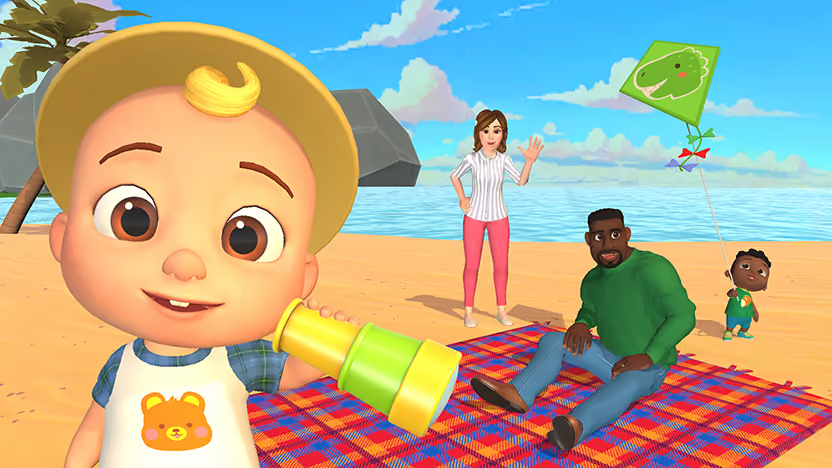
CoComelon: Sing & Play with JJ on the Weekend app is another way to play with JJ by singing and answering out loud.
My toddler loves "helping" JJ. She waits for the cues, listens, and answers, and picks up vocabulary, colors, and feelings words as she goes.
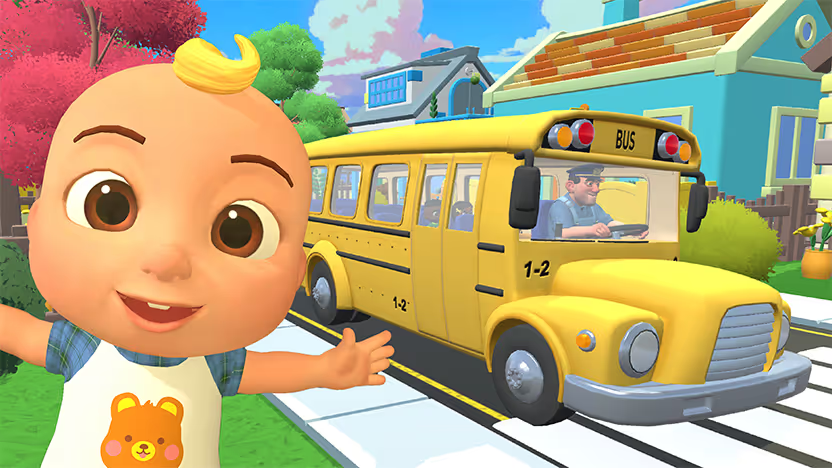
The mini-games use your paired phone as the microphone. In Wheels on the Bus, she sings along and names the parts of the bus, from the wheels to the doors to the blinking lights.
{{cta-wheels}}
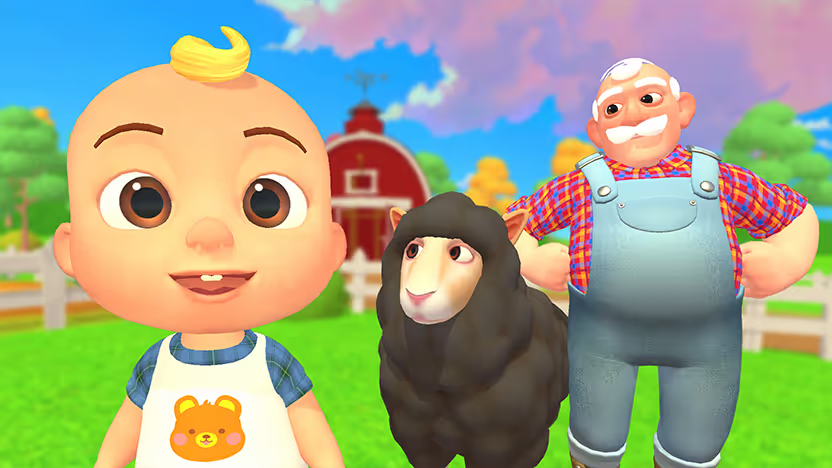
In Baa Baa Black Sheep, she calls out colors as the sheep changes to blue, pink, and purple, the same way I go about teaching colors to my toddlers.
When she needs to wind down or just wants to sing along, I open this, and she plays with JJ on our Fire TV. Here's more on why it works in our breakdown of the benefits of CoComelon.
{{cta-sheep}}
Play together on the Weekend app
I usually lean on these shows that teach kids emotional regulation after a long day out, or when there's a lot going on at home.
If you've already got these shows covered, the Weekend Games app adds games to the same screen, so the family can go from JJ sing-alongs to a grown-up game night without switching devices.
Games you can play on Weekend:
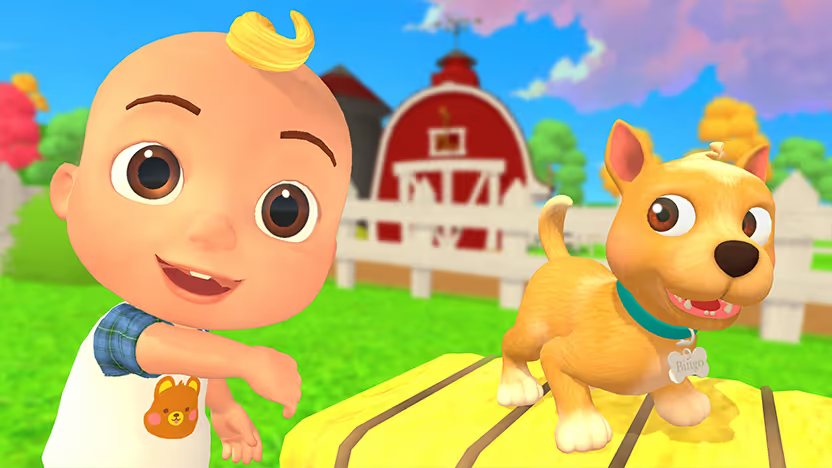
- CoComelon: Sing & Play with JJ brings sing-along mini-games for toddlers, from Wheels on the Bus to BINGO.
- Jeopardy! runs real clues and categories, answered in question form, with Daily Doubles and Final Jeopardy! wagering.
- Song Quiz plays a short clip while the room shouts the artist or title before time runs out, and whoever names both scores the most points.
- Wheel of Fortune brings the spin, the letter calls, and the puzzle solve, with the show's real categories and atmosphere.
- Guess the Emoji puts up emoji strings for decoding into phrases and titles, a good all-ages round.
- Wit's End lets your group build unique heroes and take on an unpredictable, fun fantasy quest that's different every playthrough.
- Sketchy AF rewards the earliest correct guess as each doodle draws in stroke by stroke.
- Spot On drops you onto a globe to match each clue by pin, racing the clock for a bonus.
- Meme Supreme has players match memes to an absurd prompt, then vote anonymously, up to 8 players on phones.
- Karaoke (on Roku) passes the mic around so everyone can chase the top score.
Start with the 7-day free trial, line up the family, and see which title they ask for next. The app runs on Roku, Fire TV, Samsung, and LG.
FAQs
What is the best show for teaching kids emotional regulation?
The best show for teaching kids emotional regulation depends on age. I lean on Daniel Tiger's Neighborhood for direct calm-down songs, Bluey for preschoolers working through big feelings, and CoComelon for younger toddlers who settle through repetition.
Can toddlers really learn to manage feelings from TV?
Yes, toddlers pick up calming skills from shows when a parent reinforces them afterward. A Texas Tech study on Daniel Tiger found kids remembered and used the lessons better when a parent discussed the episodes with them.
Which show is best for a very young toddler learning about feelings?
For a very young toddler, I choose Ms. Rachel or CoComelon. Both use slow speech, songs, and heavy repetition, so first feelings words like "sad" and "happy" have time to sink in.
How is CoComelon: Sing & Play with JJ different from watching the show?
CoComelon: Sing & Play with JJ is a game, not a show. Using your phone as the microphone through a QR code, your child sings and answers out loud and picks up words and colors while playing on Fire TV, Samsung, or LG.
How do I get the Weekend Games app on my smart TV?
Open your TV's app store, search "Weekend Games," and install it. The app runs on Roku, Fire TV, Samsung, and LG, and CoComelon: Sing & Play with JJ is available on Fire TV, Samsung, and LG.







.png)
.png)
.png)

Free for 7 days. Cancel anytime.


