

.avif)
.avif)

When I put a show on for my toddler, I want it to help us a little with words, feelings, and daily routine. The best educational shows for kids in this age range give us that help and still feel gentle enough to keep on in the background without setting everyone on edge.
7 best educational shows for kids (ages 2–4): Quick comparison
The show‑choosing process for my toddler
I watch how my child behaves during and after an episode. When a show works for us, my toddler repeats new words, hums a tune, or acts out little scenes with toys. When it doesn’t, I see a glazed stare, sudden crankiness, or wild restlessness that doesn’t feel like healthy energy.
I also keep a few things in mind:
- Whether the show teaches something real for this age,
- Whether the pacing keeps my child engaged without overwhelming them
- Whether the characters model kindness and problem‑solving
- Whether I feel okay leaving it on while I load the dishwasher
Over time, the shows that support our routines and spark good conversations stay, while the others slowly disappear from our watch list.
1. CoComelon
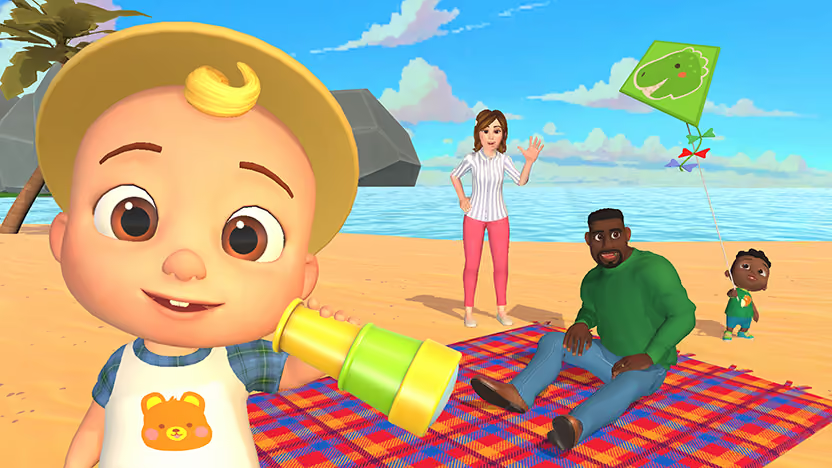
CoComelon follows JJ and his family through simple daily moments like meals, bathtime, park visits, and bedtime, all set to clear, repetitive songs. The animation focuses on bright but soft environments, and the episodes lean heavily into repetition so toddlers can join in quickly.
Why my toddler keeps asking for it
My toddler connected to CoComelon during a stage when every routine felt like a battle. Hearing the same song before bath or bed gave us a familiar path into those moments.
I noticed my child repeating short phrases from the songs during the actual routines, and that felt like a small win each time. The melodies stick in my head too, which makes it easier to hum them later when I need a gentle nudge instead of a power struggle.
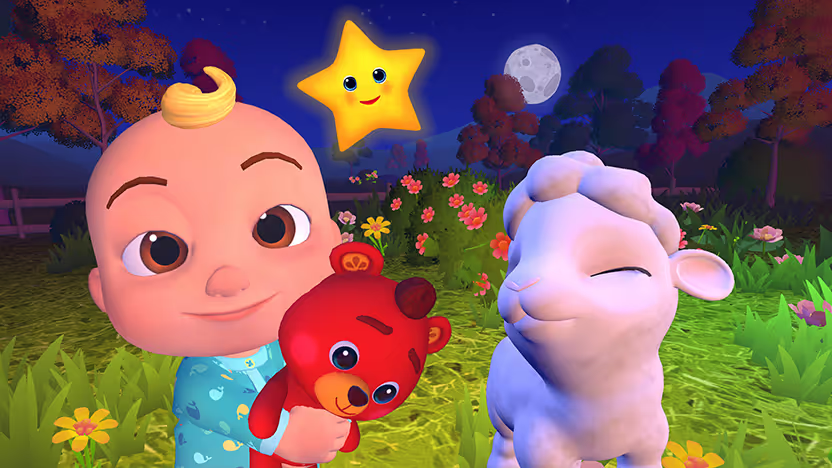
We’ve also enjoyed CoComelon: Sing & Play with JJ on the Weekend app more recently. My son is particularly fond of the newest addition, Twinkle Twinkle Little Star. He can’t fall asleep without asking for it.
Key educational wins
- Reinforces everyday routines through simple lyrics and clear visuals (brushing teeth, cleaning up, getting dressed)
- Encourages early language by repeating short, useful phrases and naming common objects
- Offers lots of chances to copy actions, gestures, and simple social cues
Pros
- ✅Very strong for toddlers who respond well to predictable songs and visuals
- ✅Focus on family, friends, and familiar places supports real‑life conversations
- ✅Easy to line up certain songs with real routines at home
Cons
- ❌Episodes can feel repetitive for adults, so I rotate them with other shows to keep things balanced
- ❌Some kids want “one more song” again and again, so I set clear limits before we start
Bottom line for our family
When I need help smoothing out a tricky part of the day or giving my toddler language for everyday moments, CoComelon is one of my safest choices. It fits especially well for ages 2–3, when songs and repetition feel like the most natural way to learn.
For a toddler in need of more interactivity, read more about CoComelon games.
{{cta-cocomelon}}
2. Bluey
Bluey follows a family of blue heeler dogs in short episodes that revolve around play, imagination, and everyday family life.
The parents actually play with their kids, and the stories lean into games, problem‑solving, and small emotional moments that feel very close to what happens in real homes.
Why my toddler keeps asking for it
My toddler loves the pretend games: turning the couch into a vet clinic, turning the hallway into an obstacle course, assigning roles to everyone in the room.
I hear phrases from the show pop up in their own play, and I see them copy gentle little interactions like apologizing or checking if someone is okay. I also catch myself watching instead of scrolling my phone, which says a lot about how grounded and human it feels.
Key educational wins
- Models problem‑solving between siblings and friends in simple, believable ways
- Gives lots of examples of sharing, taking turns, and talking through disagreements
- Inspires imaginative play that continues after the TV turns off
Pros
- ✅Strong social‑emotional themes that work for both toddlers and older siblings
- ✅Episodes stay funny for adults, which makes co‑watching much easier
- ✅Short runtimes fit into small pockets of the day
Cons
- ❌Some episodes aim at older emotions, so I skip those when my child feels tired
- ❌Interest in the games can turn into requests to re‑enact them constantly, which can be a bit much when you’re low on energy
Bottom line for our family
When I want a show that supports how we talk, play, and solve small problems as a family, I choose Bluey. It gives us language and ideas we can carry into the rest of the day, and I feel comfortable sitting down to watch alongside my toddler.
3. Blippi
Blippi is a live‑action show where a very energetic host visits places like museums, farms, construction sites, and aquariums, then talks through what everything is and how it works in simple language.
Episodes often focus on one theme, like vehicles, animals, or a particular job, and mix quick explanations with songs and playful segments.
Why my toddler keeps asking for it
My toddler loves seeing real diggers, buses, and animals on screen. When Blippi walks around a children’s museum or a zoo, I see my child lean forward and point at things, then ask about them again later when we’re out in the world.
We’ve had car‑seat conversations about recycling trucks and excavators that clearly came straight from an earlier episode. That curiosity is the part I like most.
Key educational wins
- Shows real locations and objects, which helps kids connect what they see on TV to the world outside
- Builds vocabulary around vehicles, animals, colors, numbers, and everyday environments
- Models basic safety and “how things work” in places like playgrounds, farms, and museums
Pros
- ✅Very engaging for kids who love big machines, animals, and new places
- ✅Clear, simple explanations that even younger toddlers can follow
- ✅Lots of episodes to match specific interests, from dinosaurs to construction equipment
Cons
- ❌The high energy, bright visuals, and quick cuts can feel intense, so I keep sessions short and pick calmer days to watch
- ❌There is a lot of Blippi‑branded merch out there, so I set boundaries early around what we watch versus what we buy
Bottom line for our family
When my son is going through a “What’s that truck?” or “How does that work?” phase, Blippi can be a helpful tool to feed that curiosity with real‑world examples. I treat it as a short field trip on the couch, choose specific episodes, and balance it with quieter shows so the overall mix stays gentle.
4. Little Baby Bum
Little Baby Bum uses nursery rhymes, gentle original songs, and simple 3D animation to walk through numbers, shapes, colors, and everyday routines. Episodes are usually short song segments stitched together, and the pacing stays slower than many other kids’ shows.
Why my toddler keeps asking for it
My toddler turns soft and quiet when Little Baby Bum comes on. The characters move slowly, the backgrounds feel simple, and the songs give us a steady rhythm.
I notice my child counting along or naming shapes under their breath, and the calmer style makes it easier for me to sit nearby without feeling overwhelmed.
Key educational wins
- Repeats core concepts like counting, shapes, and colors through songs
- Uses familiar routines (going to the doctor, going outside, sharing toys) as anchors for new words
- Keeps pacing and visuals soft, which helps younger toddlers follow along
Pros
- ✅Very gentle for kids who get overstimulated by louder shows
- ✅Strong focus on early math basics and vocabulary through music
- ✅Easy to sing the same songs later during playtime or bedtime
Cons
- ❌Song compilations can feel long, so I sometimes stop after one or two instead of letting a full playlist run
- ❌Storylines are minimal, which works for toddlers but may not hold older siblings
Bottom line for our family
When we need something peaceful that still reinforces numbers and shapes, Little Baby Bum is an easy yes. It pairs well with building blocks or drawing time and gives us simple, repeatable songs we can carry into the rest of the day.
5. Ask the StoryBots
Ask the StoryBots follows five small characters who dive into a kid’s question like “Why is the sky blue?” or “How do airplanes fly?” and then explore the answer with songs, sketches, and short explanations.
Each episode focuses on one main question and presents the science in very simple, kid‑friendly language.
Why my toddler keeps asking for it
My toddler loves the questions more than anything. Even if the science sits a bit above a 2‑year‑old level, hearing “Why do we have to brush our teeth?” on TV turns into the same question asked at the sink later, which gives me an easy way to answer.
I also enjoy watching this one, so I actually sit down and talk through what we see instead of half‑listening.
Key educational wins
- Tackles real science and everyday “why” questions with clear, repeated explanations
- Uses songs and humor to keep tougher concepts light
- Encourages kids to stay curious and ask more questions about the world
Pros
- ✅Great way to introduce basic science ideas even before preschool
- ✅Funny enough that parents and older siblings often enjoy watching too
- ✅Each episode focuses on one big idea, which makes it easier to remember
Cons
- ❌Some explanations land better around ages 3–4, so younger toddlers may mostly enjoy the music and characters
- ❌Visuals and jokes move quickly in spots, so I sometimes pause and explain things in simple words
Bottom line for our family
When my toddler keeps asking “why” about something big, Ask the StoryBots gives us a playful starting point. We often watch an episode together, then come back to the same idea later in the day with toys, books, or our own little experiments.
6. Daniel Tiger’s Neighborhood
Daniel Tiger’s Neighborhood is an animated show inspired by Mister Rogers’ Neighborhood that follows Daniel and his friends as they handle everyday challenges like waiting, sharing, feeling jealous, going to the doctor, and more.
Each episode centers on a simple social‑emotional lesson and a short song that repeats the main idea.
Why my toddler keeps asking for it
My toddler connects strongly to Daniel’s big feelings. When Daniel feels frustrated about sharing or nervous about something new, I can see my child quietly watching to see what he does next.
The little songs like “Use your words” or “When you feel so mad” show up later in real situations, which helps both of us pause and reset.
Key educational wins
- Teaches core social‑emotional skills like naming feelings, waiting, sharing, and calming down
- Uses simple songs to make coping strategies easy to remember
- Shows supportive adults and friends modeling kind responses
Pros
- ✅Strong research‑backed focus on social and emotional learning
- ✅Very relatable situations that come up in real family life
- ✅Short songs are easy to reuse in tough moments at home
Cons
- ❌Pacing feels slow compared to flashier shows, so I usually pick it for quieter parts of the day
- ❌Some episodes tackle heavier topics, and I choose those carefully based on my child’s mood
Bottom line for our family
When we’re working through a wave of big feelings, Daniel Tiger’s Neighborhood helps us name what’s going on and practice gentle responses. It has become one of my main tools for turning meltdowns into moments we can handle together.
7. Numberblocks
Numberblocks is an animated math show where each character is a number made of blocks, and their adventures show how numbers combine, split, and relate to each other. Episodes cover ideas like counting, adding small numbers, recognizing patterns, and understanding zero in very visual ways.
Why my toddler keeps asking for it
My toddler treats the Numberblocks like little friends. They love watching the blocks join together, break apart, and change shape, then try to act it out with their own toys.
I hear counting and number words more often on days when we’ve watched an episode, and I see more interest in lining up blocks or snacks in groups.
Key educational wins
- Makes abstract ideas like addition, subtraction, and zero very concrete and visual
- Encourages kids to see numbers as building blocks that combine and separate
- Supports early counting, pattern recognition, and basic arithmetic
Pros
- ✅Very strong focus on foundational math concepts for preschoolers
- ✅Short episodes that work well as a small math “boost” during the week
- ✅Inspires hands‑on play with blocks, toys, or household objects
Cons
- ❌Some episodes pack in a lot of ideas, so I sometimes rewatch the same one rather than jumping ahead
- ❌The style can feel intense if you play multiple episodes in a row, so I keep it to occasional use
Bottom line for our family
When my child shows interest in counting or lining things up, Numberblocks gives us a fun way to lean into that curiosity. I use it as a quick math companion, then bring the same ideas into block play or snack time.
How to choose the right show for your child
When I choose the best educational shows for kids in this age range, I think about what our day looks like and what my child can handle. On slow mornings, I lean on calmer options like Little Baby Bum or Daniel Tiger’s Neighborhood, where the pacing stays gentle, and we can talk about feelings or count along.
On days when my toddler keeps asking “why,” I go for Bluey or Ask the StoryBots and sit beside them so we can pause and explain things in simple words.
If we need help with routines, I pick CoComelon or Little Baby Bum and match specific songs to moments like bath, bedtime, or cleanup. When my child wants big machines, animals, or real‑world places, Blippi and Numberblocks work better in short doses.
I try to keep a small mix:
- One show for social‑emotional learning
- One for music and routines
- One for curiosity or early math
When it’s time to play on the TV
The Weekend app is here for the moment you’ve had enough clicking through episodes and want your TV to feel playful again. Weekend turns the same screen you use for the best educational shows for kids into a space where everyone talks, guesses, and sings together.
Everything your group needs lives in one app:
- Jeopardy! settles debates about who actually knows the most random facts
- Song Quiz turns music recognition into a contact sport where someone always shouts the wrong artist with total confidence
- Wit’s End builds unique fantasy adventures around what you say out loud, so no two sessions ever repeat the same story
- Wheel of Fortune (on Roku) brings the classic letter‑calling puzzle format to your screen
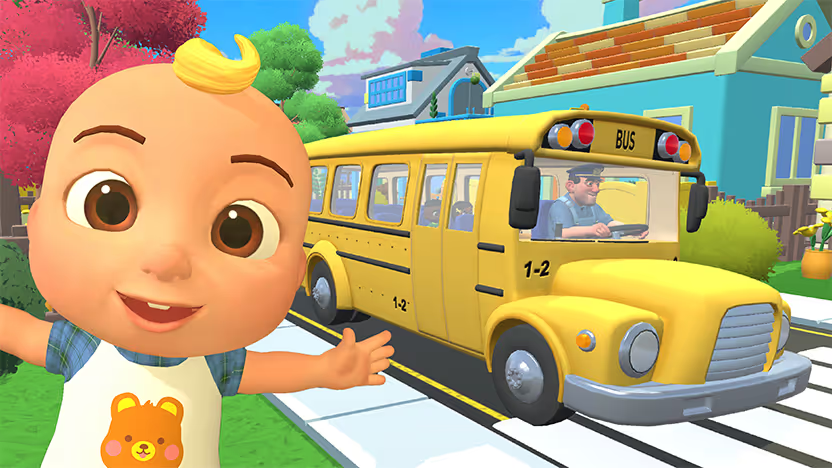
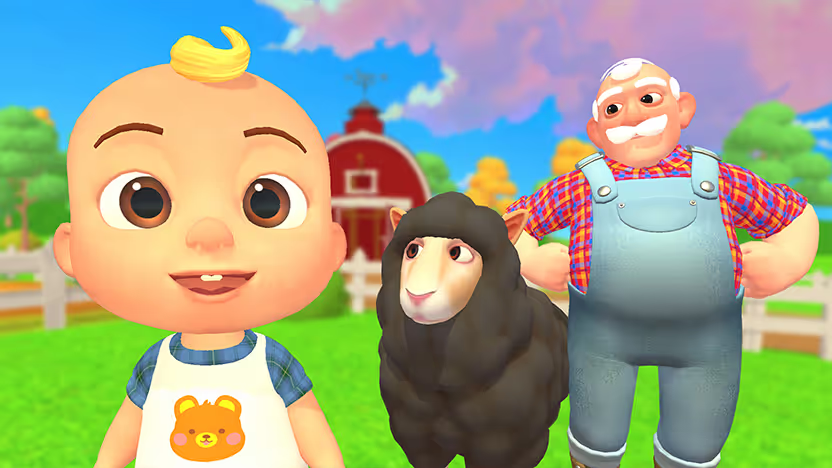
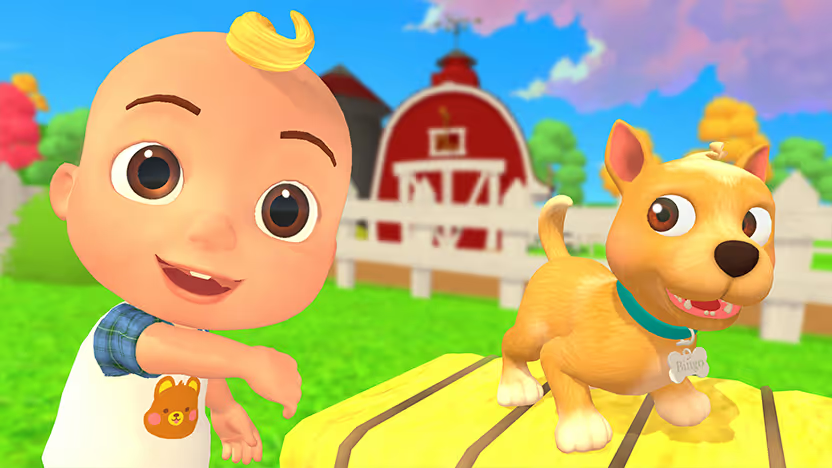
- CoComelon: Sing & Play with JJ turns CoComelon songs into on‑your‑couch dance parties where kids copy JJ’s moves and sing along at full volume
- Karaoke (on Roku) separates the actual singers from people who only sing in the shower
- 20 Questions (on Roku) reveals who asks clever questions and who burns turns on obvious guesses
We run on Roku, LG, Samsung, and Fire TV. Start a 7‑day free trial and see what happens when your family controls the story, the music, and the games on the TV by talking to us instead of letting “next episode” auto‑play.
FAQs
What is the best educational show for kids ages 2–4?
The best educational show for kids ages 2–4 depends on your child. I use Bluey for social skills, CoComelon and Little Baby Bum for songs and routines, and Blippi when my toddler wants real-life trucks, animals, and places.
How many educational shows does a toddler really need?
A toddler only needs a few educational shows. I keep one calm feelings show (like Daniel Tiger), one music‑heavy routine show (CoComelon or Little Baby Bum), and one curiosity pick like Blippi or Numberblocks, then rotate instead of adding more.
How can I get the Weekend app on my smart TV?
To get the Weekend app on a smart TV, open your TV’s app store on Roku, LG, Samsung, or Fire TV, search for “Weekend,” install it, then launch games like Wit’s End, Song Quiz, or CoComelon: Sing & Play with JJ from your home screen.







%20(1).png)
%20(1).png)
%20(1).png)

Free for 7 days. Cancel anytime.


