

.avif)
.avif)

Games for 2-year-olds at home work best when they feel like play first and learning second. I've curated a list of the ones with the right mix of movement, music, and simple rules to educate your toddler while keeping them engaged.
Games for 2-year-olds at home: At a glance
1. CoComelon: Sing & Play with JJ on Weekend
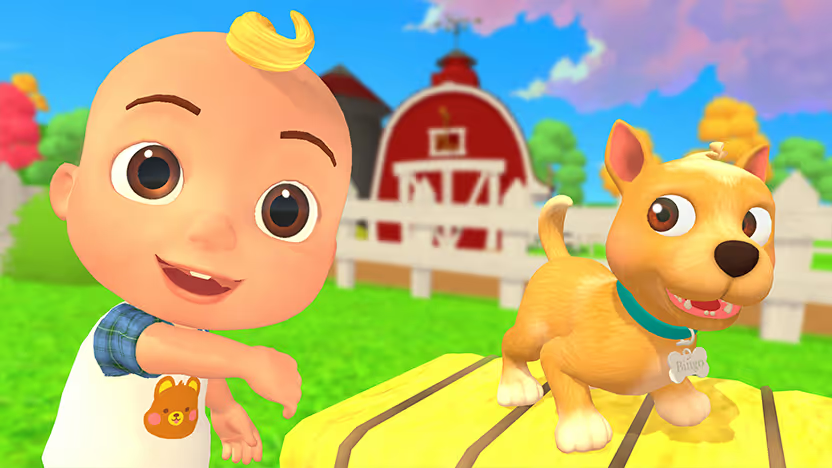
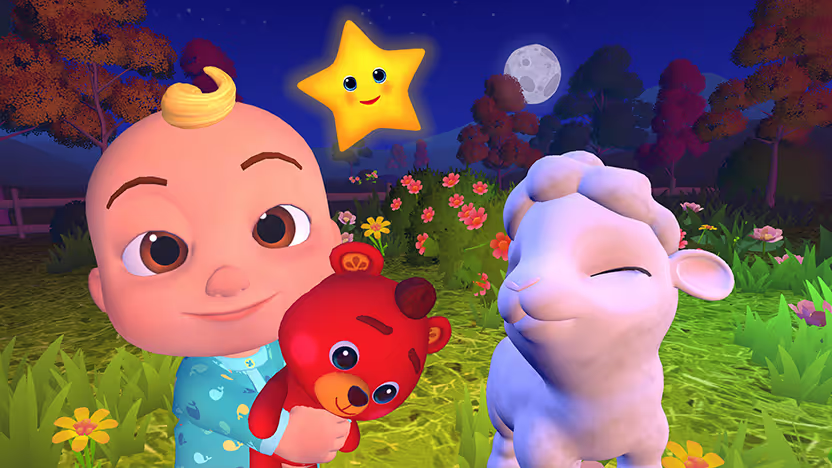
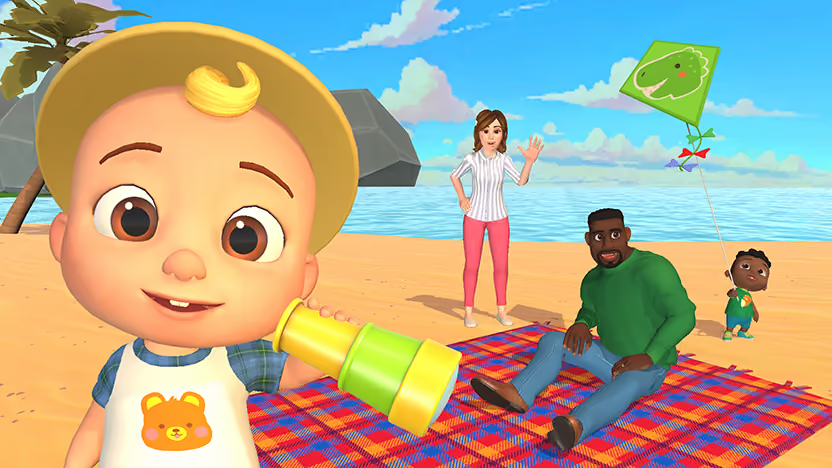
What it does: Turns your TV into a playful CoComelon experience where your toddler sings, talks, and moves with JJ.
Best for: CoComelon‑loving toddlers who learn best through music and imitation.
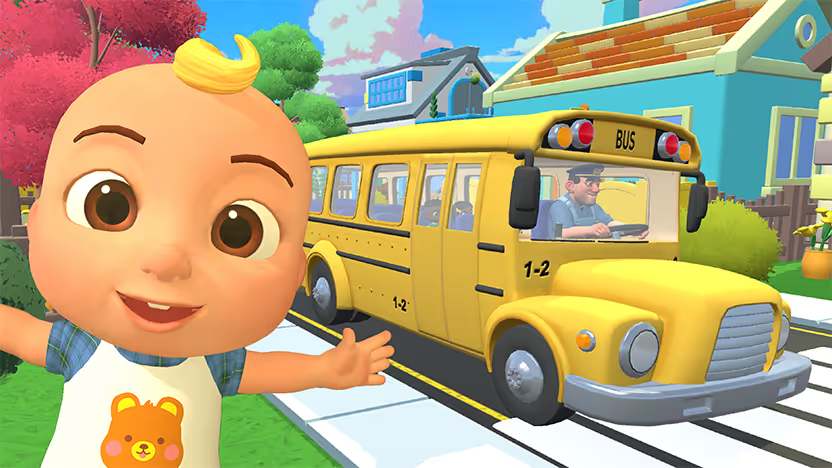
The first time I opened CoComelon: Sing & Play with JJ, I expected background entertainment and instead got the most fun and engaging sing‑along. My toddler followed JJ’s cues to clap, spin, and shout answers, so it felt more like guided play than just watching a show.
Mini‑games like Wheels on the Bus, BINGO, and Tiny Clues kept the energy high while gently weaving in rhythm, letters, shapes, and colors.
Key strengths for toddlers
- Encourages active singing, talking, and moving
- Uses familiar CoComelon songs and characters to make learning feel comforting and fun
- Runs right on supported smart TVs, so starting a quick session is easy
Bottom line
CoComelon: Sing & Play with JJ earns a steady place in my games for 2-year-olds at home because it reliably turns a regular afternoon into a short, joyful learning moment.
{{cta-cocomelon}}
2. Alphabet Treasure Trail
What it does: Turns your hallway or living room into a simple letter treasure hunt with big alphabet cards and favorite toys.
Best for: Toddlers who love running around and delivering things.
The first time I tried Alphabet Treasure Trail, I thought the letters might feel too advanced. Instead, my toddler treated each letter as a place to visit.
We taped a few letters on the walls, picked one stuffed animal, and started “delivering the bear to B” and “the monkey to M.” It felt like a delivery game with letters quietly riding along in the background.
Key strengths for toddlers
- Moves their whole body while introducing a few letters at a time
- Lets you start with letters from their name so everything feels personal
- Stays exciting even when you repeat the same letters on different days
Bottom line
Alphabet games like Alphabet Treasure Trail stays on my list of games for 2-year-olds at home because it turns letter exposure into an easy movement game that feels like pure fun to them.
3. Color & Shape Rescue
What it does: Turns clean‑up into a rescue mission where toys “go home” to matching colors or shapes.
Best for: Toddlers who enjoy sorting and putting things into containers.
I invented Color & Shape Rescue on a day the floor completely disappeared under toys. Instead of saying “clean up,” I taped a few colored sheets to the floor and called them “homes.”
My toddler instantly tried to rescue every red, blue, and yellow toy back to its home. The same task that usually caused complaining turned into an enthusiastic race to save the colors.
Key strengths for toddlers
- Makes categorizing colors and shapes feel like pretend play
- Builds early math thinking through simple sorting without worksheets
- Gives them a sense of control during a moment that often feels bossy
Bottom line
Color & Shape Rescue earns its place among my favorite games for 2-year-olds at home because it blends learning and clean‑up in a way that works for both of us.
4. Laundry Basket Basketball
What it does: Uses a laundry basket and soft items as a simple indoor throwing game.
Best for: High‑energy toddlers who need a safe way to “get the wiggles out.”
Laundry Basket Basketball started one rainy afternoon when my toddler clearly needed to move, but the weather said otherwise.
I set a basket on the floor, rolled up some socks, and called it a basketball game. We took turns tossing, cheering every time something landed inside, and laughing when it bounced off. It felt like the living room shrank and suddenly became a tiny gym.
Key strengths for toddlers
- Builds hand‑eye coordination with very low pressure to “get it right”
- Introduces turn‑taking in a way that still feels exciting
- Lets you increase challenge slowly by moving the basket farther away
Bottom line
Laundry Basket Basketball stays in my rotation of games for 2-year-olds at home because it turns everyday laundry chaos into a quick, powerful energy release.
5. Story Dice Drama
What it does: Uses picture dice or cards to tell short, silly stories together.
Best for: Quieter moments when you want connection but not chaos.
I added Story Dice Drama when I needed something calm that still felt playful. I drew a few simple pictures on paper squares and started telling a story one card at a time.
When I paused and asked my toddler what happened next, the story immediately became funnier and stranger. We ended up with a cat driving a car to bed, and the giggles said more than any worksheet ever could.
Key strengths for toddlers
- Grows vocabulary through repeated words in new combinations
- Encourages imagination while still feeling safe and familiar
- Gives shy talkers a playful way to practice speaking up
Bottom line
Story Dice Drama stays on my list of go‑to games for 2-year-olds at home because it turns basic pictures into shared stories that feel special every single time.
6. Kitchen Band Parade
What it does: Turns safe kitchen items into instruments for a marching band parade.
Best for: Toddlers who love banging, tapping, and dancing.
Kitchen Band Parade began the day I realized the pots and pans would get used as drums no matter what I said. Instead of fighting it, I leaned in and called it a parade.
We grabbed wooden spoons, plastic bowls, and a jar with rice, then walked up and down the hallway, switching between “loud,” “quiet,” and “freeze.” The noise suddenly had a purpose, and my toddler listened carefully for each new instruction.
Key strengths for toddlers
- Builds rhythm and listening skills through fun stop‑and‑go cues
- Lets them explore volume and sound in a controlled way
- Turns their natural urge to make noise into something you can both enjoy
Bottom line
Kitchen Band Parade belongs in any realistic list of games for 2-year-olds at home because it channels noisy energy into music instead of constant “no” from me.
7. Sensory Scoop Station
What it does: Creates a simple sensory bin with rice, cereal, or water plus scoops and containers.
Best for: Kids who enjoy pouring, scooping, and watching things flow.
Sensory Scoop Station rescued a long afternoon when nothing else held attention. I laid out a towel, poured a shallow layer of rice into a bin, and handed over a measuring cup.
My toddler immediately started scooping, pouring, and refilling, completely absorbed in the process. The room got quieter, and I could actually see how carefully those small hands tried to control each scoop.
Key strengths for toddlers
- Strengthens fine motor skills through repeated scooping and pouring
- Naturally encourages focus without feeling strict or forced
- Offers a calming, predictable activity when everything else feels overstimulating
Bottom line
Sensory Scoop Station remains one of my favorite games for 2-year-olds at home because it gives both of us a calmer, slower pocket in the middle of a busy day.
8. Picture Match Hunt
What it does: Combines picture matching with a simple indoor scavenger hunt.
Best for: Toddlers who love pointing at pictures and naming what they see.
Picture Match Hunt started because my toddler kept handing me the same picture book over and over.
I took photos of familiar objects around our home, printed them, and laid them on the floor as “clue cards.” As soon as I said, “Let’s find this spoon,” my toddler rushed to the kitchen to match the real object.
It felt like our house had turned into a live‑action version of their favorite book.
Key strengths for toddlers
- Connects pictures to real‑world objects in a concrete way
- Adds gentle movement into a simple naming game
- Builds confidence as they recognize more of their own environment
Bottom line
Picture Match Hunt earns a spot among the best games for 2-year-olds at home because it makes everyday objects feel interesting and worth exploring again.
9. Tunnel & Bridge Adventure
What it does: Builds a basic obstacle course with pillows, blankets, and furniture.
Best for: Toddlers who climb everything and need a safe challenge.
Tunnel & Bridge Adventure happened the day I saw my toddler halfway up the couch for the third time. I pulled down some cushions, draped a blanket over two chairs for a tunnel, and put a tape “bridge” on the floor.
We walked the course together, and my toddler proudly crawled, stepped, and balanced through each part. The same climbing energy suddenly had a clear path.
Key strengths for toddlers
- Strengthens balance and body awareness without needing special equipment
- Lets them practice following short sequences like “tunnel, then bridge”
- Feels like a mini playground even in a small living space
Bottom line
Tunnel & Bridge Adventure stays on my list of reliable games for 2-year-olds at home because it gives big movers something safe, satisfying, and structured to do.
10. Toddler Helper Challenge
What it does: Turns simple household tasks into “missions” your child can complete.
Best for: Kids who constantly say “I do it!” during chores.
Toddler Helper Challenge came from sheer survival. Instead of trying to keep my toddler away while I handled chores, I started assigning small jobs: matching socks, moving clothes from basket to washer, wiping low cabinet doors.
As soon as I called these “special helper missions,” the resistance melted. My toddler took each task seriously and showed off the finished job like a trophy.
Key strengths for toddlers
- Builds independence and a sense of responsibility early on
- Gives them real, meaningful tasks instead of fake “busy work”
- Turns routine chores into shared moments instead of conflict zones
Bottom line
Toddler Helper Challenge deserves its place among games for 2-year-olds at home because it turns everyday life into a series of confident “I did it” moments.
How to choose the right games for 2-year-olds at home
You can rotate just a few of these ideas across the week and still cover movement, language, and early problem‑solving. Think about what your toddler naturally gravitates toward and start there.
You could:
- Pick movement‑heavy games like Laundry Basket Basketball or Tunnel & Bridge Adventure when they have lots of energy.
- Choose calmer options like Sensory Scoop Station or Story Dice Drama for quieter moments.
- When CoComelon music feels like the only thing that captures their attention, lean into it with short, active sessions that keep them singing and learning along.
You don’t need complex supplies or long schedules. A few minutes of focused, playful interaction several times a day matches how 2-year-olds learn best.
Ready to go beyond toddler game time?
If you want simple, low‑stress games for 2-year-olds at home, CoComelon: Sing & Play with JJ on Weekend already gives you an easy win on your TV.
You get short, interactive CoComelon sessions that fit real life, and your toddler gets to sing, move, and learn with JJ without you explaining a single rule. But the real strength of Weekend shows up when the rest of the family wants in.
The same app that keeps your toddler happy in the morning can run full game nights after bedtime, so you’re not juggling different systems or buying a new game for every age group. One subscription turns your TV into a shared game hub for kids, teens, and adults.
Games to expect from Weekend:
- A classic round of Jeopardy! puts everyone in clue‑and‑question mode, where quick thinking and random knowledge finally pay off.
- In Song Quiz, you race to name songs and artists, and it almost always turns into a loud, competitive sing‑along.
- With Wheel of Fortune, you call letters, solve puzzles, and feel that familiar rush when the answer clicks.
- With Wit’s End, you speak your actions out loud and watch a live, story‑driven, chaotically fun adventure unfold around your group.
- A round of Karaoke (on Roku) hands over the spotlight so everyone can take a turn and try to top the last performance.
- Playing 20 Questions (on Roku) pushes your group to think sharper, asking yes‑or‑no questions to zero in on the answer.
Start with CoComelon: Sing & Play with JJ for the tiny tots, then flip straight into one of our other classic games once they’re asleep. Take the 7‑day free trial for a spin and see which game turns “one quick round” into “okay, just one more.”
FAQs
What are the best games for 2-year-olds on Weekend?
The best games for 2-year-olds on Weekend are CoComelon experiences like Sing & Play with JJ (Fire TV, Samsung, LG) because they use songs, movement, and super-simple prompts my toddler understands instantly.
Is Weekend Games actually good for toddlers and older kids together?
Yes, Weekend Games is actually good for toddlers and older kids together because CoComelon works for little ones, then older kids jump into Jeopardy!, Song Quiz, or Wheel of Fortune (Roku, Fire TV, Samsung, LG) without switching apps.
How can I get the Weekend app on my smart TV?
You can get the Weekend app on your smart TV by opening your TV’s app store, searching “Weekend Games,” installing it, and signing in; I had it running in under a minute.
Can I use Weekend for both learning and fun?
You can use Weekend for both learning and fun because CoComelon leans into letters, shapes, and songs for toddlers, then trivia and party games keep the grown‑ups laughing later.










.png)
.png)
.png)

Free for 7 days. Cancel anytime.


