

.avif)
.avif)

Teaching colors to toddlers feels simple on paper and messy in real life, so I treat it like a series of playful experiments instead of a formal lesson.
I’ll walk you through specific methods I use at home, what actually works, and how to dodge some common frustrations with teaching toddlers at home.
Teaching colors to toddlers: At a glance
Why teaching colors to toddlers matters
When I lean into color play, I see more than new words. I see my toddler sort, compare, and make tiny decisions that build early math and language skills and fit right into learning through play instead of worksheets.
Color talk also shows up everywhere later in childhood, from picture books to early science to simple instructions like “take the blue cup.”
Research and early childhood experts say most kids start to learn colors from around 18 months, though reliable identification often happens closer to age 3. I treat those numbers as a loose guide and not a deadline, because pressure almost always slows my child down.
{{cta-cocomelon}}
Method 1: Narrate colors in real life
Daily life already overflows with color, so this method rides along with what you already do. Instead of carving out “lesson time,” you turn small moments into quick color callouts.
The key is clean, simple sentences that end on the color word.
Lines like “this ball is red,” “your socks are yellow today,” or “that car is green” give the color a strong position in the sentence and keep the pattern easy to follow. You drop these comments into getting dressed, snack time, walks, and grocery trips, then move on without turning them into a quiz.
Over time your toddler hears hundreds of these little phrases. At first they only listen. Later they start to echo the last word. Eventually they try full sentences back at you. The structure stays casual, and you never need to set up a special activity for this method to work.
Method 2: Focus on one color at a time
When color talk feels scattered, a spotlight color brings focus. Instead of juggling the whole rainbow, you pick 1 basic color and let it dominate for a few days.
One “blue weekend” might look like this:
- Pull out blue cars, blue blocks, a blue ball, and a blue cup.
- Dress your toddler in a blue shirt or socks if you have them.
- Keep pointing out “this ball is blue,” “your cup is blue,” “that car is blue too.”
Everything else in life keeps its normal color. You just give blue extra air time. After a few days, you move the spotlight to red, yellow, or green. Those short bursts of focus stack up and often feel more manageable than trying to teach every color name at once.
Method 3: Sort and match by color
Sorting gives toddlers a job for their hands, which helps color move from “just a word” to something they can act on.
Prompts stay short. You might say “can you find blocks for the blue bowl” or “this circle wants only red friends.” Even if your child gets it wrong half the time, that trial and error still builds the idea that certain things belong together because of color.
Method 4: Use art and sensory play
Some toddlers need paint on their fingers and foam up to their elbows before they care about color. Art and sensory play tap into that need and sneak color learning into the mess.
Finger painting gives a clean starting point. You squeeze out 2 or 3 colors, then talk through everything your toddler does.
“Your hand is in the blue paint,” “you added red, now it looks purple,” and “this corner stayed yellow” all attach words to visible changes. Colored water in clear cups works the same way. A few drops of color, some scoops or droppers, and you can say “this water started yellow, now it looks green.”
On days when attention runs hot, you can pull out a higher energy option:
- Hide small toys under piles of colored baking soda.
- Hand over a squeeze bottle or spoon with colored vinegar.
- Call out “blue bubbles,” “red bubbles,” and “you found the green car” as the fizz reveals each toy.
Art and sensory play feel like pure fun from your toddler’s perspective. Behind the scenes, those moments train their eyes to notice color changes and connect them to language.
Method 5: Read and sing about colors
Quiet, story-focused kids often soak up color through books and music games for kids better than through loud games. You lean into that by choosing very simple stories and repeating them until the patterns feel familiar.
Board books that show 1 color per page keep things clear. You point and say “this car is blue” or “this frog is green” every time you hit that page.
Pattern-based stories that pair animals and colors work well because only 1 part of the sentence changes each time, which helps your toddler predict what comes next.
The goal is not to rush. The goal is to loop through that same pattern night after night so it becomes part of the rhythm of your bedtime routine.
Songs play a similar role. You don’t need anything complex. A basic chant like “red, yellow, green, and blue, I see colors, yes I do” gets the job done if you point to each color while you sing. Toddlers often copy the tune first and color words later.
On days when your voice feels tired, or you want a fresh way to keep familiar songs going, an interactive option like CoComelon: Sing & Play with JJ can back you up.
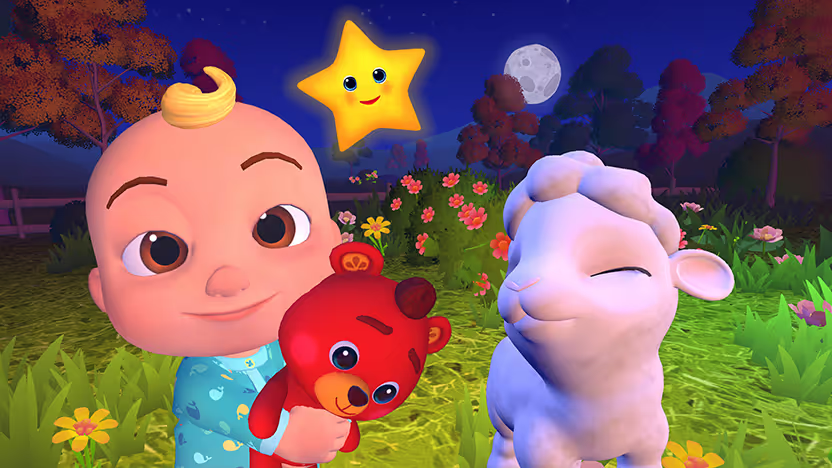
The Baa Baa Black Sheep mini-game, for example, turns a classic song into a little color story, with the sheep changing from black to blue, pink, and purple as it hides near different plants and fruit.
{{cta-cocomelon}}
Method 6: Turn cleanup into a color game
Cleanup time usually brings friction, so this method turns it into a color challenge instead of a power struggle.
You might say:
- “You grab every green toy, I’ll grab every blue one.”
- “All the red cars park in this box.”
- “Blocks in this color live on this paper square.”
The floor stays the same, but the frame changes. Your toddler now hunts for “their” color instead of just hearing “clean up” on repeat. Even when they miss, they still scan the room, compare colors, and move toys with a clear purpose, which counts as both help for you and practice for them.
Method 7: Use baths and mealtimes as color labs
Baths and meals show up every day anyway, so this method tweaks those moments instead of scheduling new activities.
In the tub, you drop a color tablet into the water, hand over cups in 1 or 2 matching colors, and say things like “today the water is blue” or “this cup looks dark blue, that one looks light blue.”
During meals, you build a “green plate” with peas, cucumber, kiwi, and spinach, or a simple rainbow snack with a food for each color and talk through each.
You don’t need to stretch your day to fit more “activities” around these moments. You only tweak what goes into the bath, onto the plate, or onto the screen with 1 of the best apps for toddlers for a few minutes.
On a cheery morning, for example, you might run a quick CoComelon: Sing & Play with JJ session on the Weekend app before or after breakfast.
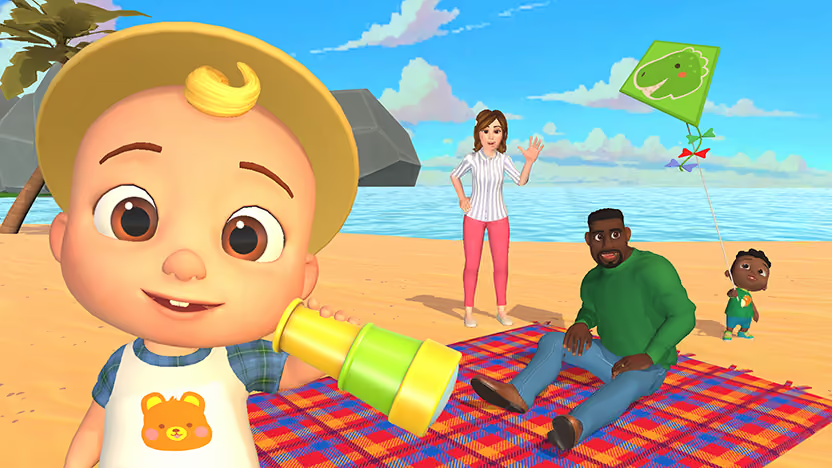
A mini-game like Look And Learn Adventure or Tiny Clues turns the living room or JJ’s home into a little “find the red car” or “spot something blue” hunt, which mirrors the same color spotting you already do at the table and in the tub.
You still guide the language with lines like “you found the yellow house” or “JJ spotted a green tree,” so the game feels like an extension of your routine instead of a totally separate thing.
Which methods to choose
If I had to pick only a few methods, I would start with real life narration, simple sorting, and art or sensory play.
You can lean on real-life narration if …
- Your toddler is under 18 months or brand new to color words.
- You feel tired and need a method that fits into daily routines.
You can lean on sorting and matching if …
- Your toddler loves to line up toys or group things.
- You need a short, structured activity that feels like a game.
You can lean on art and sensory play if …
- Your toddler craves big, messy experiences and you have time to clean up.
- You want to mix color learning with fine motor skills and basic science.
I treat books, songs, and themed baths or snacks as easy extras that keep color words fresh without extra mental load.
Best practices for teaching colors to toddlers
Over time, I noticed a few principles that make teaching colors to toddlers feel smoother:
- Follow your toddler’s pace. Some toddlers name colors clearly at 2, while others still mix them at 3, and both can fall within normal development.
- Limit how many colors you highlight at once. I usually focus on 1 to 3 basic colors until those feel solid before I move on.
- Pair color with action. I say “this ball is red” while we roll it, throw it, or drop it in a matching bucket so the word connects to something fun.
- Expect mixing and mistakes. Toddlers often confuse similar colors, such as blue and green, or mix up color words just because the sound feels fun.
- Keep it playful. Studies and educators agree that toddlers learn best through play, repetition, and real-life examples, not drills.
I also remind myself that constant pressure to “perform” a color on command usually backfires. I see more progress when I point out colors and celebrate guesses without turning everything into a test.
Turn teaching colors into something your toddler actually plays with
Teaching colors to toddlers works best when it feels like a game and not a quiz. You already do that with books, crayons, snacks, and bath time.
Weekend lets you keep that same playful, shout-out-loud approach when you turn on the TV, so your toddler sings, shouts, and spots colors from wherever they are in the living room instead of zoning out in front of a show.
Weekend pulls your favorite interactive experiences onto the biggest screen in your home, all inside a single app:
- Jeopardy! is perfect when someone claims they “know a little about everything” and you want proof
- Wit’s End creates a messy, hilarious fantasy story that somehow gets better the more chaotic it becomes
- Song Quiz kicks off the second a tune gets hummed and suddenly everyone is competing to name it first
- Wheel of Fortune turns guessing letters into a group effort full of bold calls and lucky breaks
- Karaoke brings out the performers, whether they planned on it or not
- 20 Questions keeps things simple while still making everyone think a little harder than expected
The Weekend app works on Roku, LG, Samsung, and Fire TV. Grab the 7‑day free trial and see what happens when your family controls the stories, songs, questions, and color hunts on the TV just by talking, instead of passing a controller or fighting over a tablet.
FAQs
How long does it take to teach colors to toddlers?
Teaching colors to toddlers usually takes months, not days, and most kids name colors reliably somewhere between ages 3 and 4. I use Weekend to keep that practice playful with short, repeatable sessions on the TV instead of only drills at the table.
What is the hardest part of teaching colors to toddlers with Weekend?
The hardest part is not expecting Weekend to “teach everything” in a week. I get the best results when I treat CoComelon and other games as fun practice between real‑life color moments, not as a total replacement for books, crayons, and everyday play.
Do I need special toys or flashcards if I use Weekend?
No, you don’t need special toys or flashcards when you already use Weekend on your TV. I see more progress when I mix everyday objects like cups and snacks with voice games like CoComelon inside Weekend than when I rely on flashcard sets alone.
What if my toddler doesn’t seem interested in colors, even with the Weekend app?
If a toddler doesn’t seem interested in colors, I lean on what they already love inside Weekend, like singing with JJ or spotting animals, then add simple color words on top. I still talk to our pediatrician if I notice concerns about color and language across both screen time and everyday play.
How can I get the Weekend app on my smart TV?
To get the Weekend app on a smart TV, open the app store on your Roku, LG, Samsung, or Fire TV, search for “Weekend,” then download and sign in to start your free trial.














%20(1).png)
%20(1).png)
%20(1).png)

Free for 7 days. Cancel anytime.


