

.avif)
.avif)
.avif)
My youngest daughter started saying “thank you” on her own around age 2, and I never made her do it. Forcing “magic words” like please and thank you didn't work for either of my kids. What I've learned about how to teach manners to toddlers comes down to a few small habits.
I model how to use the words, and sometimes fill them in for her when she blanks, and keep my expectations low while they’re getting the hang of it. Every kid is different, though. Some of this clicked fast with my youngest and took months with my oldest, so pick what fits yours.
How to teach manners to toddlers: The quick version
- Model the manners you want to hear
- Narrate the words instead of ordering them
- Say it for them when they forget
- Practice with role-play, songs, and games
- Match your expectations to their age
- Praise the effort, skip the scolding
- Keep it consistent from home to the checkout line
Step 1: Model the manners you want to hear
Toddlers copy what they see. CDC's research found that most toddlers this age imitate adults doing everyday things, like sweeping with a broom. The same copying applies to polite words like please, thank you, and excuse me. Remember to say those words to your toddler, not only around them.
When my daughter handed me a block, I said thank you every time, and within a few weeks she started saying it back.
I also try to personalize it so your toddler hears real gratitude. Instead of a flat thanks, try "thank you for sharing your crackers, that was kind." My kids copy TV characters from shows too, and mine already imitate JJ and the CoComelon cast, right down to the polite words they hear on screen.
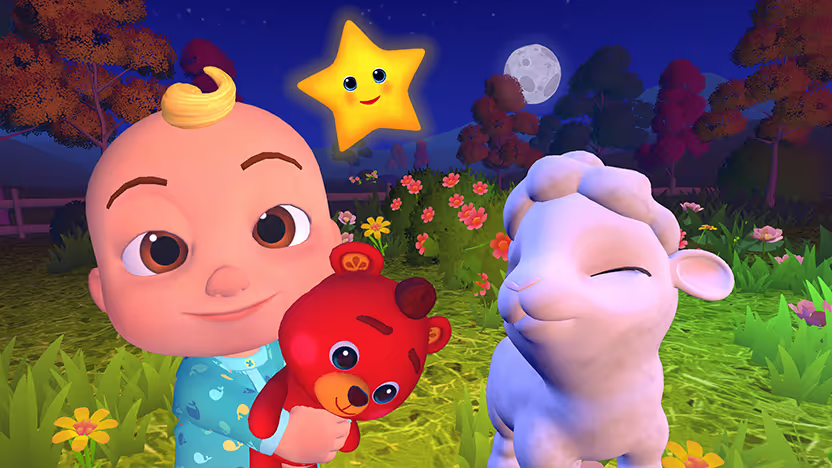
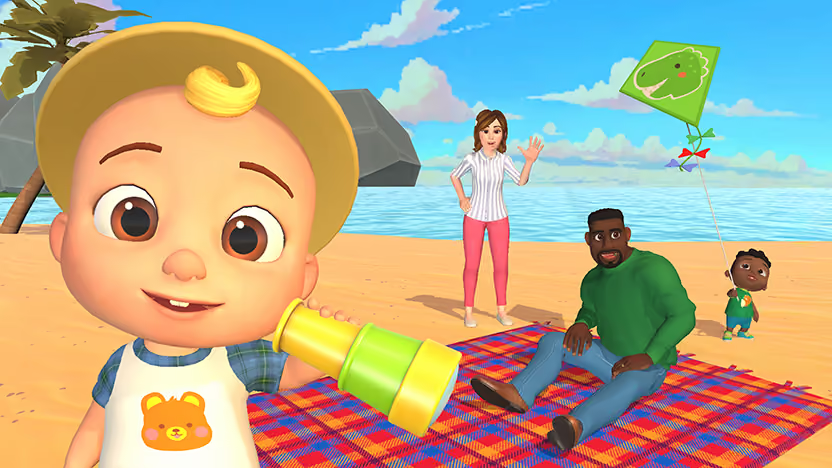
That's one reason I like CoComelon: Sing & Play with JJ on Weekend. My daughter sings along and gets practice at taking turns and following steps, using the characters she already copies at home.
{{cta-cocomelon}}
Step 2: Narrate the words instead of ordering them
"What's the magic word?" teaches a toddler to perform on cue. Narrating teaches them what the word is actually for. So instead of quizzing my kids, I just say the polite version back to them.
When my toddler reaches out and shouts "water," I skip "what do you say" and say "it looks like you're asking me to please pass your water." She hears the full, correct sentence, and there's no awkward standoff.
This was the biggest change from how I was raised. Saying the line for her models what please does in a real exchange, so she learns the point of it instead of learning that the word gets me off her back.
Step 3: Say it for them when they forget
When your kid forgets, fill in the words yourself. If Grandma hands over a snack and my youngest says nothing, I say "thank you, Grandma" out loud for her. That way, nobody gets put on the spot.
I did this before either of my kids could talk, saying both sides of the exchange at meals, the asking and the thanking, so the words were familiar long before they could repeat them.
One night my youngest came out with "no, thank you" on her own, and I'd never once drilled it. I've modeled the line enough, and she understood it just as a way people speak and not like an extra-effort addition.
Step 4: Practice with role-play, songs, and games
Manners come through repetition, not lectures. Toddlers learn to say please by doing it, and CDC's parenting tips put repetition and consistency at the center of how they pick things up at this age.
Rehearse the moment before it happens. Before a visit to the family’s place, we act it out, knocking on a pretend door and practicing "hi" and "thank you for having me." Running the scene once takes the pressure off the real one.
Fold it into play so the reps don't feel like a lesson. A lot of the games we already play at home double as manners practice, taking turns, waiting, and handing something over.
Songs do the same job. A manners song my toddler hums back at the table beats a hundred reminders, and the songs we sing together are the ones my kids hum without being asked.
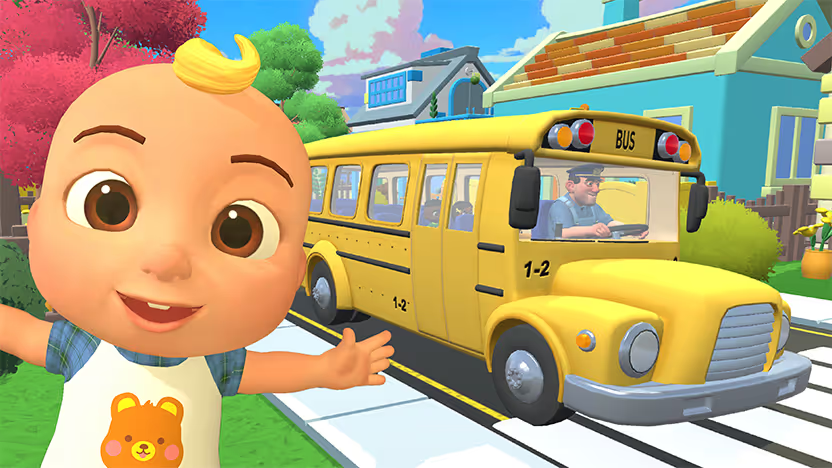
Singing games count as reps too. When my toddler plays Wheels on the Bus in CoComelon: Sing & Play with JJ, she sings along and works through 5 stops in order, so she practices following steps while she plays.
{{cta-wheels}}
Step 5: Match your expectations to their age
Most manners battles come from expecting too much too soon. A toddler who won't share isn't being rude, because sharing and turn-taking aren't natural social behaviors yet.
Children this age play next to each other but don't yet know how to share or take turns, so showing them how is on us.
Expect the whole thing to take years, not weeks. A forgotten please on a hard day isn't a verdict on your parenting; it's just a toddler being a toddler.
Step 6: Praise the effort, skip the scolding
Catch the manners you want more of. Don’t just catch them being naughty, but catch them being good and be specific about it. So instead of a flat "good girl," I name the thing my child did, like "you said thank you all by yourself, that was kind."
Specific praise does more than "be polite" ever will. If you draw too much attention to the word, it can make a toddler dig in and refuse the word on purpose, which is the opposite of what you want.
With my older kid, I’ve regularly been thanking them for helping out around the house. When manners get noticed, toddlers repeat them.
Step 7: Keep it consistent from home to the checkout line
The mistake I made early on was treating manners like a public performance, reminding my kids to say please at a birthday party but letting it slide at home when nobody was around.
Toddlers notice that gap fast, and a rule that only shows up in front of an audience reads as optional. So I insist on the same words in private that I want in public. Please when they ask me for more crackers at our own kitchen table. Thank you when I hand over a toy on the living room floor.
Consistency does more work than intensity here. Using the words every day, in low-stakes moments nobody sees, beats any manners crackdown the morning of a party. The everyday reps are what make it automatic.
Games help because a toddler will replay the same one every day. Peek-a-Boo in CoComelon: Sing & Play with JJ is one of our daily picks, so she gets the same follow-the-steps practice on repeat.
{{cta-peekaboo}}
What good manners actually look like at this age
Manners are more than please and thank you, and knowing what other good habits are can help you spot progress you'd otherwise miss.
Alongside the 2 big ones, I'm watching for greetings ("hi" and "bye," with a wave early on), not grabbing, gentle hands with people and pets, and the first cracks at taking turns.
The same modeling-and-practice loop that teaches please works on all of them. It's also how toddlers pick up early skills that have nothing to do with manners, like naming colors or counting, so once the loop clicks for you it pays off across the board.
Practice manners together with the Weekend Games app
A shared game on the TV adds a few more opportunities to practice manners and following instructions. It's an easy one for kids to follow because they get to imitate their favorite characters.
If you've got a mix of ages at home, the same app has games the older kids and grown-ups can play on family night, so everyone's in on one thing instead of splitting off by age.
Open the Weekend app, and you've got a lineup for every age at the table:
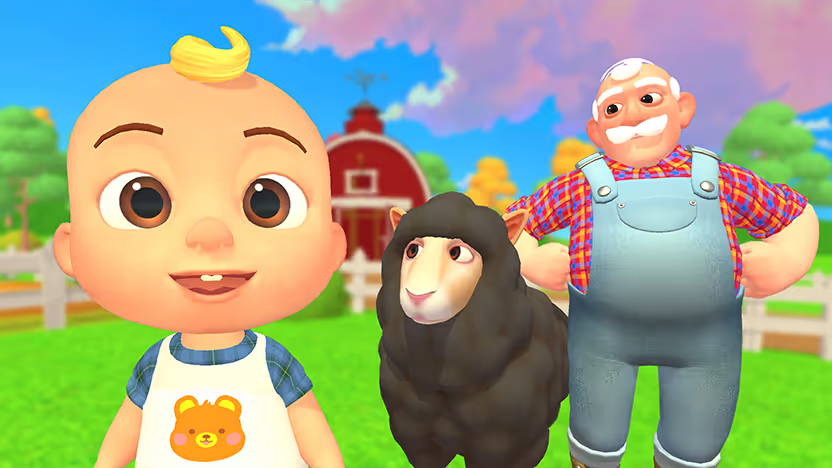
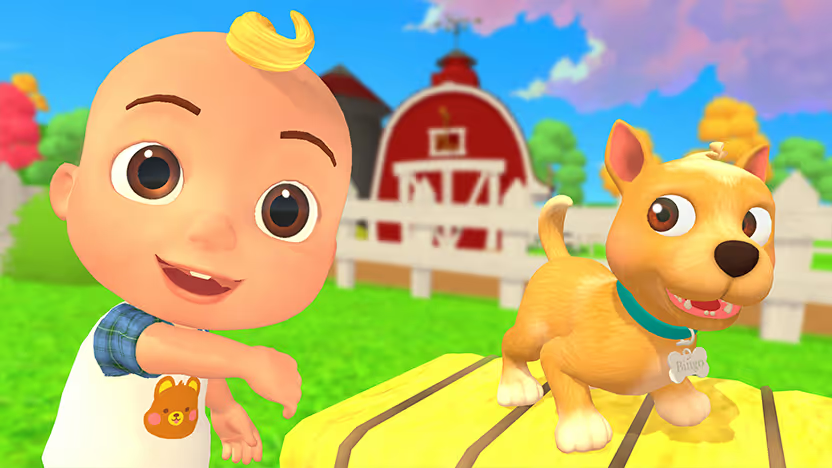
- CoComelon: Sing & Play with JJ for toddlers, who sing along, name colors, and practice taking turns with JJ by speaking into a phone that acts as the microphone
- Jeopardy! gives trivia fans a fresh challenge after the playlist ends. Choose Casual, Classic, or Expert, then shout your answer when the clue appears.
- Song Quiz brings music trivia across decades and genres to the room. Hear a short clip, then shout the song and artist to earn points.
- Wheel of Fortune pairs partners as puzzle solvers. Spin the wheel, call letters, and solve the board.
- Spot On sends the room around the world from the couch. Drop a pin and see who gets closest.
- Guess the Emoji gives visual-puzzle fans fast clues to decode. A row of tiny pictures can cause a surprisingly big argument.
- Karaoke (on Roku) puts singers in the spotlight. The game tracks lyrics and pitch, so each chorus gives you a score to chase.
- Sketchy AF builds a drawing a stroke at a time, and the earlier you guess, the more you score.
- Meme Supreme lets everyone vote on the funniest response to each strange prompt. Bring your best internet brain.
The Weekend app runs on Roku, Fire TV, Samsung, and LG, so it works with whatever TV you already have. Try it today with a 7-day free trial, then find out which games your family reaches for again.
FAQs
At what age can toddlers learn manners?
Toddlers can start learning manners as early as 12 to 18 months, when they begin copying your words and actions. CDC milestones show most 18-month-olds imitate adults and follow one-step directions, so please and thank you can go in early, even though consistent use takes years.
Should I make my toddler say please and thank you?
You don't need to make your toddler say please and thank you, and forcing it often backfires. Narrate the words for them instead, like “it looks like you're asking me to please pass your cup,” and they'll pick up what the words mean over time.
Why won't my toddler share?
Your toddler won't share yet because sharing isn't a skill most kids have before age 2 or 3. CDC notes toddlers play next to each other before they know how to take turns, so you'll need to show them how rather than expecting it on its own.
How do I teach manners without nagging?
You teach manners without nagging by modeling the words daily, saying them for your toddler when they forget, and praising the times they get it right. Practice through songs, role-play, and games adds reps without turning every meal into a reminder.
What's a good way to practice manners at home?
A good way to practice manners at home is to rehearse real moments before they happen and fold the words into play. Role-play a visit to Grandma's, sing manners songs, or take turns in a game like CoComelon: Sing & Play with JJ so the words feel normal instead of forced.







.png)
.png)
.png)

Free for 7 days. Cancel anytime.


