

.avif)

.avif)
When I pick learning activities for 2-year-olds at home, I’m trying to survive real days more than I’m trying to build perfect Pinterest boards. I want ideas for my toddler that will fit between naps and snack time and don’t wreck the living room every time.
I’ve used every activity on this list with real toddlers who change from cuddly to wild in minutes.
Some days we lean more on interactive games like CoComelon: Sing & Play with JJ mini-games on the smart TV, and other days we stay off devices and survive on water play and pretend games. My goal is a mix of movement, simple choices, and language that still feels like play.
7 best learning activities for 2-year-olds at home: TL;DR
- Interactive TV games
- Pretend bus & farm runs
- Water play at the sink
- Color & shape hunts
- Matching & sorting baskets
- Action picture book time
- Toddler “helping” jobs at home
1. Talk to play on smart TV via the Weekend Games app
What it does: Turns your TV into an active play station where your 2-year-old sings, talks, and moves with JJ.
Best for: Parents who want low‑prep learning activities for 2-year-olds at home that bring in music and simple directions.
Interactive TV rounds stay near the top of my list because I can launch them in seconds and my toddler knows JJ right away. With Weekend’s app on my smart TV, I open CoComelon: Sing & Play with JJ, pick a mini‑game, and we jump into guided play.
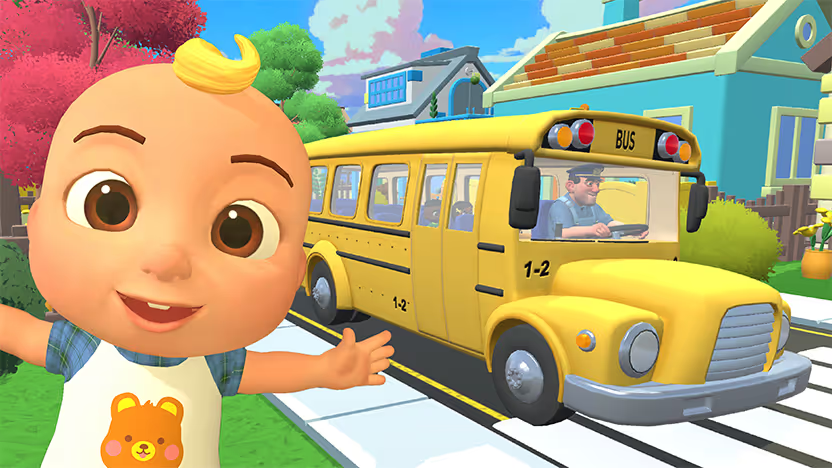
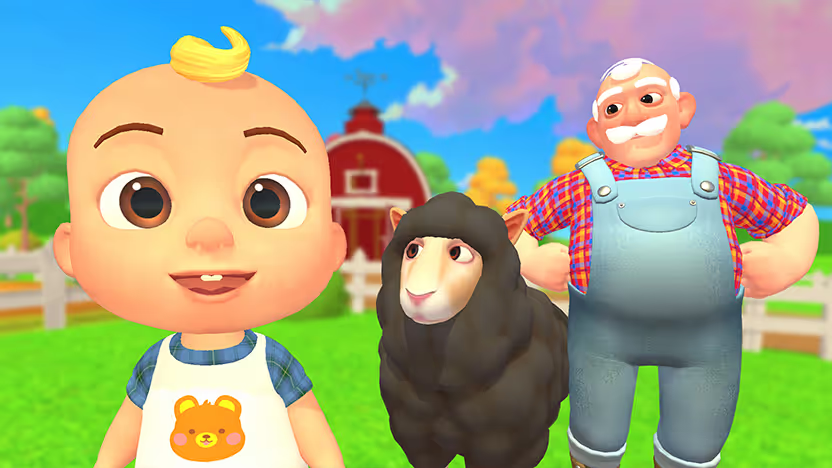
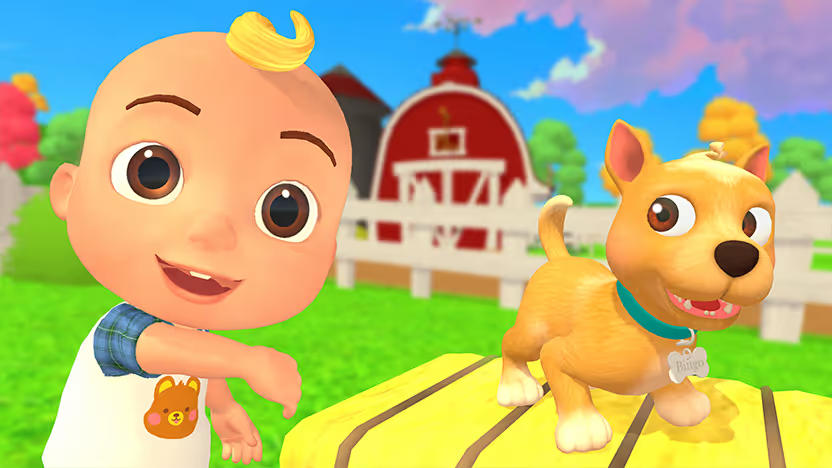
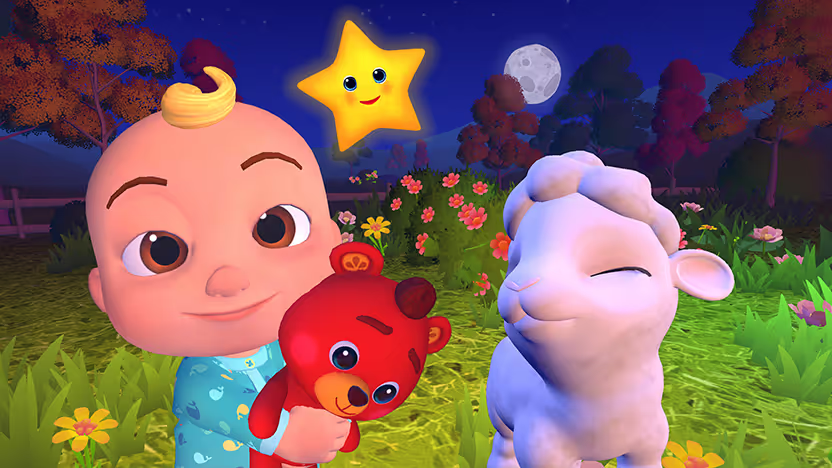
Wheels on the Bus has my child copying bus motions, BINGO turns into clapping and letter play, Peek‑a‑Boo becomes giggly hide‑and‑seek, and Baa Baa Black Sheep pulls animals and colors into our living room.
{{cta-peekaboo}}
Key features
- Short rounds match 2-year-olds’ attention spans and keep the activity from dragging
- Clear on‑screen prompts help toddlers follow along without complicated rules
- Familiar songs give shy kids a safe way to join in
Pros
- Brings music, movement, and language together in one place
- Fits neatly between meals or naps when I don’t have time for a big setup
Cons
- I still have to set limits so “one more song” doesn’t turn into an hour
Bottom line
When I think about learning activities for 2-year-olds at home that feel easy for me and exciting for my child, talk-to-play games with JJ are the options I use most.
{{cta-cocomelon}}
2. Pretend bus & farm runs
What it does: Uses chairs, stuffed animals, and imagination to turn your hallway into a bus route or farm walk.
Best for: Toddlers who love vehicles or animals and enjoy acting out simple stories.
On days when my child keeps singing about buses or sheep, I line up chairs as bus seats, hand over a toy steering wheel or plate, and call out things like “doors open” or “horns honk” while we drive.
Other days, we set up a row of stuffed animals, pretend to feed each one, and talk about what they eat and where they sleep. The stories stay short and silly, which makes it easy to repeat during the week.
Key features
- Uses household items, so I don’t need new toys for this game
- Lets toddlers play “driver” or “farmer,” which gives them a feeling of control
- Works in tight spaces if I shrink the route, herd, or farm
Pros
- Supports imagination and simple storytelling
- Adds movement without a formal obstacle course
Cons
- Needs some floor space for chairs or animals
Bottom line
Pretend bus and farm runs are some of my favorite learning activities for 2-year-olds at home because they turn simple objects into little adventures.
3. Water play at the sink
What it does: Turns the sink into a small water station for scooping, pouring, and watching what floats or sinks.
Best for: Kids who feel drawn to water and love seeing what happens when they pour or dunk things.
I pull a sturdy step to the sink, add a shallow pool of warm water, and drop in cups, spoons, and a few plastic toys.
My toddler pours from cup to cup, dunks toys, and notices which items float near the top and which ones drop down. I talk through their choices in short phrases so the play stays fun, not like a test.
Key features
- Uses the sink instead of a large tub, so the splash zone stays tight
- Simple rules, like “water stays in the sink,” help avoid big spills
- Fits into short windows before dinner or after naps
Pros
- Builds hand‑eye coordination and a sense of cause and effect
- Calms many toddlers, which helps in late‑afternoon slumps
Cons
- Needs close supervision around water
Bottom line
When I want activities that feel soothing and still teach something, sink water play gives us a lot of mileage with very little prep.
4. Color & shape hunts
What it does: Turns the house into a simple hunt for colors and shapes, using toys, books, and everyday objects.
Best for: Toddlers who are starting to name colors and shapes and enjoy walking around and pointing.
I choose one color or shape, like “blue” or “square,” and ask my child to help me find it in the room. We move slowly, point at items, and say the word together each time we spot a match.
When we’ve found a handful, we pick a new target and start again. The game stays short so it feels like a win instead of a chore.
Key features
- Uses items we already own, so there’s no new shopping step
- Works in any room, from the kitchen to the bedroom
- Playable quietly if the day already feels busy
Pros
- Builds vocabulary in a natural way
- Adds light movement without turning into a full workout
Cons
- Some kids lose interest quickly, so I keep each hunt brief
Bottom line
Color and shape hunts are one of the easiest learning activities for 2-year-olds at home when I want quick, low‑prep practice with words that still feels like a game.
{{cta-shapes}}
5. Matching & sorting baskets
What it does: Uses small bins to match pairs and sort items into groups that make sense to a 2-year-old.
Best for: Kids who love putting things “in” and “out” and are ready for basic thinking games.
I grab 2 or 3 baskets and a pile of toys, like cars, animals, blocks, or socks.
We start by matching pairs, such as 2 red blocks or 2 cats, then move into sorting by type, like “animals in this basket, cars in this one.” I ask short questions like “Where does this go?” and let my toddler try first before I guide.
Key features
- Uses everyday items, so I don’t need special learning sets
- Doubles as cleanup when we send toys back to their usual bins
- Grows with my child; we can add new categories over time
Pros
- Supports early grouping and problem‑solving
- Gives toddlers a visible sense of progress as baskets fill up
Cons
- At first, some kids toss items around instead of sorting them
Bottom line
Matching and sorting baskets are great learning activities because they turn a love of filling containers into real thinking practice.
6. Action picture book time
What it does: Adds simple actions to short picture books so story time becomes a listening and movement game.
Best for: Toddlers who want to be part of the story and struggle with long quiet sessions.
I pick a short book and give each repeated word or character a movement:
- When the dog shows up, we pat our legs
- When a bus appears, we roll our arms like wheels
- When someone goes to sleep, we rest our heads on our hands
My child waits for their cue, then acts it out, which keeps them interested right through the last page.
Key features
- Works with books we already own, no special titles needed
- Turns reading into a shared game instead of a one‑way talk
- Fits well before naps or bedtime
Pros
- Builds listening skills and basic memory
- Helps wiggly kids stay with the story longer
Cons
- Long books can feel too heavy, so I stick to short ones here
Bottom line
Action picture book time is one of my favorite learning activities for 2-year-olds at home because it keeps stories active without turning reading into a formal lesson.
7. Toddler “helping” jobs at home
What it does: Turns small chores into simple tasks a 2-year-old can handle, like carrying, wiping, or sorting.
Best for: Kids who follow you around the house and want a role in what’s happening.
I offer light jobs, such as carrying a small stack of laundry to the basket, wiping a low table, putting toys in one bin, or “feeding” stuffed animals with pretend food.
I talk through each step in short phrases like “pick up,” “carry,” “drop,” and “wipe,” then thank my child when they finish the job so they feel proud of their work.
Key features
- Uses real tasks from daily life, so it feels meaningful
- Creates a small routine for times when I need to get things done
- Can stay short, which keeps the chore from feeling heavy
Pros
- Supports motor skills and following directions
- Gives toddlers a sense of responsibility and achievement
Cons
- Slows chores down; this is about learning, not speed
Bottom line
Toddler “helping” jobs are reliable learning activities for 2-year-olds at home because they blend real life and play in a way that makes kids feel capable.
How I choose learning activities for 2-year-olds at home
When I weigh learning activities for 2-year-olds at home, I’m not trying to hit every skill in one day. I want a small mix that feels doable for me and fun for my child.
Engagement comes first
I watch if my toddler’s eyes light up, if they move with purpose, and if they ask to do the activity again. If I’m dragging them through it, the idea goes on the “once in a while” shelf.
Skill‑building comes next
I look for hidden benefits like motor practice, new words, or simple thinking, but I let play lead. Wheels on the Bus isn’t a reading lesson, yet it teaches body parts, actions, and turn‑taking when we treat it like a game.
Setup and cleanup stay simple
Anything that takes more than 10 minutes to set up or leaves the room wrecked doesn’t become a daily activity. I’d rather repeat simple wins than chase complicated projects that drain me.
Mood and timing guide the day
High‑energy moments call for pretend bus runs, water play, or dance‑heavy JJ songs. Calm pockets lean toward action picture books, matching baskets, or Look and Learn Adventure on the TV.
Which activities should you start with?
If you’re starting to build learning activities for 2-year-olds at home, I’d try 3 ideas first:
- Interactive TV with JJ for guided language and movement
- One pretend game (bus or farm runs) for imagination
- One hands‑on idea like sink water play or matching baskets
Run each activity in short bursts and see what your child wants more of. Most toddlers do best with a few repeatable favorites that match their mood.
Weekend is your source for toddler edutainment
The Weekend Games app turns interactive TV games into one of the easiest learning activities for 2-year-olds at home that can still grow with the rest of your family. When your toddler wants JJ and songs, you get something that feels like real play.
CoComelon: Sing & Play with JJ on Weekend (Fire TV, Samsung, LG) turns your living room into a music‑powered playroom. Each mini‑game nudges your child to move, point, and speak up in short, repeatable rounds.
For older kids and adults, the same Weekend app is packed with games the whole room plays out loud:
- Jeopardy!, when the room wants a classic quiz show feel
- Song Quiz, when everyone feels like shouting song titles and artists
- Wheel of Fortune, when you want that letter‑guessing tension and payoff
- Guess the Emoji, when you want a fast visual guessing game that gets everyone reacting to the screen
- Wit's End, when your group wants a story‑driven fantasy quest based on your choices
- Karaoke (on Roku), when it’s time to pass the mic and see who actually sings
- Sketchy AF, when you want a rapid‑fire race to guess each doodle before the drawing completes
- Spot On, when the group feels like traveling the world by dropping pins on a spinning globe
- 20 Questions (on Roku), when the night needs one more clever guessing round
You can find the Weekend app on Roku, Fire TV, Samsung, and LG and start a 7‑day free trial, with all these games unlocked while you try it. Let your toddler have their moment, then lean on Weekend’s trivia, music, and party games when the kids head to bed.
FAQs
What are the best learning activities for 2-year-olds at home?
The best learning activities for 2-year-olds at home mix movement, simple choices, and language. I lean on sink water play, color hunts, pretend bus routes, and short CoComelon: Sing & Play with JJ sessions on Weekend.
How long should learning activities for 2-year-olds last?
Learning activities for 2-year-olds can run anywhere from 5 to 15 minutes, depending on the child, before you switch. I watch my child’s cues and change to a new idea as soon as I see boredom or frustration so the day stays light for both of us.
How many learning activities does a 2-year-old need each day?
Many toddlers do well with 3 to 6 simple activities spread through the day. I repeat easy wins like sink water play or a quick JJ round on Weekend and add new games only when we both have enough energy.
Is interactive TV play okay for 2-year-olds?
Yes, interactive TV play can be okay for 2-year-olds when it gets them moving, singing, and talking. I keep CoComelon: Sing & Play with JJ sessions short and pair them with off‑TV play like books and pretend games.
How can I get the Weekend Games app on my smart TV?
You can get the Weekend Games app on a smart TV (Roku, Fire TV, Samsung, LG) by opening your TV’s app store, searching for “Weekend Games,” and installing it. I like that once it’s installed, every game lives in one place on my home screen for game night.







.png)
%20(1).png)
%20(1).png)

Free for 7 days. Cancel anytime.


