

.avif)
.avif)
.avif)
Three feels like a turning point. When I plan learning activities for 3-year-olds at home, I’m dealing with a kid who suddenly has opinions, big feelings, and way more questions. I need ideas that can handle “I want to do it myself” without turning the whole day into a fight.
At this age, my child wants to tell stories, “help” with real tasks, and show off new skills. Some days we lean on talk‑to‑play games on the TV; other days it’s all about blocks, art, and long pretend scenes on the living room floor.
I try to keep a small mix of activities that stretch their brain a bit while still feeling like play.
Learning activities for 3-year-olds at home: TL;DR
- Play games via the Weekend Games app
- Living room “story map” building
- Kitchen counting and sorting helper
- Pattern and matching art station
- Simple “I Spy” memory walks
- Build-and-knock block challenges
- Feelings and character puppets
1. Talk to play on smart TV via the Weekend Games app
What it does: Turns your TV into an interactive play space where your 3-year-old answers questions, sings, and responds to what’s on screen.
Best for: Families who want learning activities for 3-year-olds at home that blend music, simple decisions, and listening practice without a big setup.
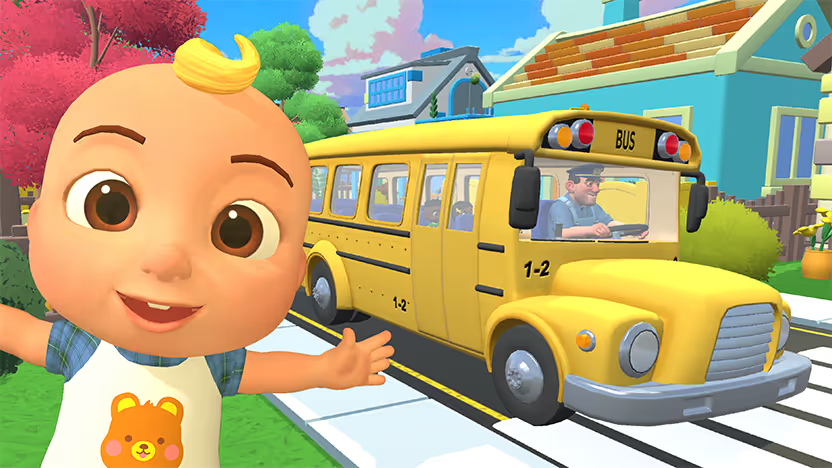
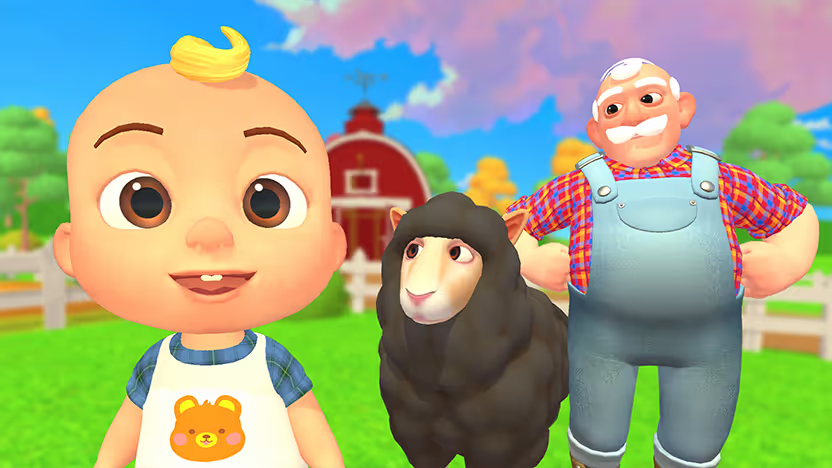
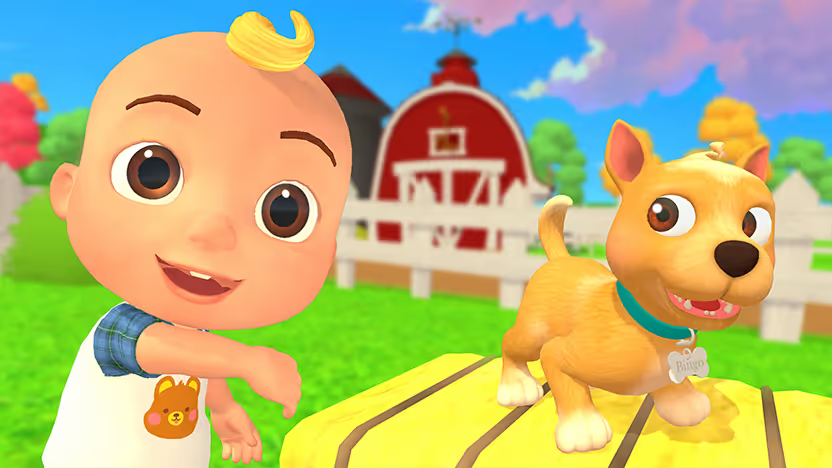
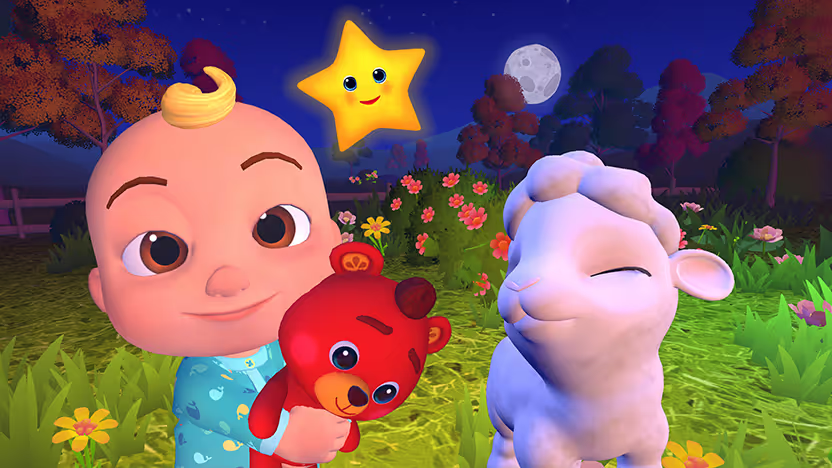
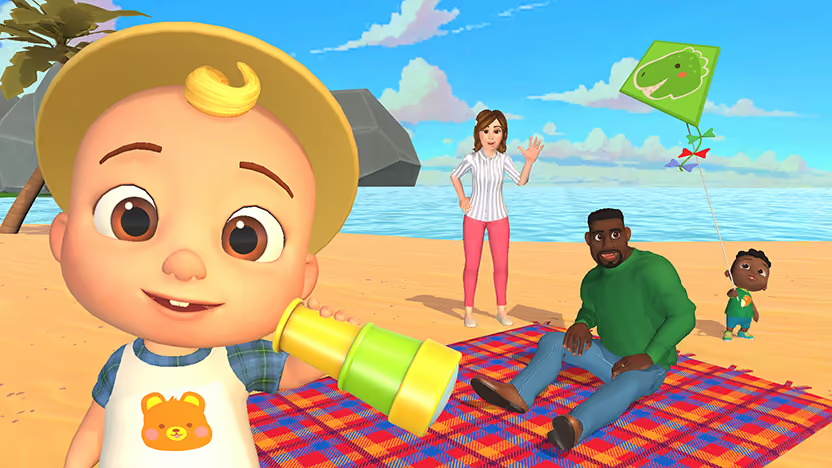
I tend to start with a short round of talk‑to‑play on the Weekend Games app when we’re stuck inside. On my smart TV, I open CoComelon: Sing & Play with JJ, pick a mini‑game, and watch my child shout answers, copy motions, and talk back to the TV.
Other nights, we switch to trivia or party games when cousins or friends drop by, and everyone ends up laughing in front of a shared screen instead of disappearing into separate devices.
Key features
- Session length stays flexible: we can do a quick JJ round or stack a trivia game on top when the room has more energy
- Prompts are simple enough that my child can join in even when they’re tired
- The lineup covers toddler‑friendly play and grown‑up game night in the same app
Pros
- Gives us a place to run music, quiz, and party games without digging through menus
- Fits into evenings when I don’t have time or space to pull out a big board game setup
Cons
- Without boundaries, “one more game” turns into a chain of requests
Bottom line
When I want learning activities for 3-year-olds at home that can start as a JJ sing‑along and end as a full family game night, Weekend is the hub I open first.
{{cta-cocomelon}}
2. Living room “story map” building
What it does: Uses pillows, blankets, and toys to build a simple map where your child’s characters travel through different “zones.”
Best for: Kids who already invent stories with their toys and like acting them out.
I clear a patch of floor, lay down blankets as “land,” and mark out a few zones like a forest, a house, and a river using pillows or cushions.
My 3-year-old picks a main character, then moves them across the map while we decide what happens in each area. It feels like a mini quest we can change every time.
Key features
- Uses what we have at home, so there’s no extra shopping step
- Lets kids practice planning a simple path: start here, visit there, finish at home base
- Can grow more complex over time with new zones and rules
Pros
- Builds imagination, sequencing, and early spatial thinking
- Gives us an easy way to talk through “beginning, middle, end” in a story
Cons
- Needs a bit of floor space for the map
Bottom line
Living room story maps have become one of my favorite learning activities for 3-year-olds at home because they turn random pillows and toys into a real adventure.
3. Kitchen counting and sorting helper
What it does: Turns simple kitchen prep into counting and sorting practice with real tools and ingredients.
Best for: Preschoolers who follow you around and want to help in the kitchen.
When I cook, I invite my 3-year-old to count things like carrot slices, spoonfuls of rice, or apple wedges and place them into small bowls. We sort spoons vs. forks, or dry vs. wet items, and talk through what we’re doing in short phrases. It keeps them close while we sneak in early math.
Key features
- Uses food and tools I’m already handling
- Works in short bursts while a pot simmers or bread toasts
- Lets kids feel helpful while they learn
Pros
- Builds counting, matching, and simple comparing words like “more” and “less”
- Easy to set up with no extra supplies needed
Cons
- Needs safety checks so small items and sharp tools stay out of reach
Bottom line
Kitchen counting and sorting jobs are strong learning activities for 3-year-olds at home because they blend real life and early math in a way that feels natural.
4. Pattern and matching art station
What it does: Uses stickers, crayons, or colored paper to make simple lines and blocks of repeating colors or shapes.
Best for: Kids who enjoy art and are ready to notice “same, same, different” patterns.
I set out a piece of paper, a handful of stickers or colored shapes, and a few crayons. We build short rows together, like red‑blue‑red‑blue, or circle‑square‑circle‑square, then my child tries copying or extending the pattern. If they get stuck, we point and say the order out loud.
Key features
- Works with low‑mess supplies such as crayons and stickers
- Keeps patterns short so they feel more like fun than tests
- Can switch between colors, shapes, or small drawings
Pros
- Supports early math skills like sequencing and matching
- Gives kids a finished “pattern picture” they can proudly show off
Cons
- Some children need help peeling stickers or placing shapes
Bottom line
Pattern and matching art stations give me a very easy way to add early math to learning activities for 3-year-olds at home without losing the playful art feel.
5. Simple “I Spy” memory walks
What it does: Uses short walks through the house or outside as a game where kids spot items, then remember them later.
Best for: Kids who like looking around and telling you what they see.
We pick a room or a small stretch of sidewalk, then I say “I spy something red” or “I spy something that makes noise.” My child guesses and points at items, then we head back to the couch and try to list what we remember. Some days we draw 2 or 3 of the objects afterward.
Key features
- Needs nothing beyond our space and a bit of time
- Can be played indoors or outdoors
- Fits well before meals or after rest time
Pros
- Builds observation and recall in a light way
- Gives us a chance to talk about details
Cons
- If I make clues too vague, my child gets frustrated
Bottom line
“I Spy” memory walks have become one of my go‑to learning activities for 3-year-olds at home because they turn regular rooms into simple thinking games.
6. Build‑and‑knock block challenges
What it does: Uses blocks to build simple towers or bridges, then gently knocks them down and rebuilds.
Best for: Kids who already enjoy stacking and want to see how high or wide they can go.
I set a small block pile on the floor and say we’re going to build a tower “as tall as your hand” or “as tall as your knee.” My child stacks pieces while I steady the base, then we count how many blocks it took before the tower falls. We restart and change the goal next time.
Key features
- Works with any block set we already own
- Uses simple challenges that feel playful, not stressful
- Can move to bridges or walls once towers get easy
Pros
- Builds fine motor skills, patience, and a sense of cause and effect
- Gives kids practice with counting and comparing sizes
Cons
- Requires cleanup so we don’t step on blocks later
Bottom line
Build‑and‑knock block challenges are reliable learning activities for 3-year-olds at home because they combine hands‑on building with easy little “science experiments.”
7. Feelings and character puppets
What it does: Uses simple puppets or stuffed animals to name feelings and act out short scenes.
Best for: Kids who talk through their toys and are starting to describe how they feel.
I pick 2 puppets or animals and give each a feeling word like “excited,” “nervous,” or “sad.” We act out a tiny scene, such as getting ready to go to the park or dealing with a loud noise, and talk about what each character might do or say.
My child often takes over the voices once they understand the setup.
Key features
- Uses toys we already have, no formal puppets required
- Keeps scenes short so they match a 3-year-old’s focus range
- Can repeat feelings across different stories
Pros
- Builds emotional language and empathy
- Gives kids a safe way to talk about their own feelings through a character
Cons
- Some children need time before they feel ready to voice a puppet
Bottom line
Feelings and character puppets are some of my favorite learning activities for 3-year-olds at home because they turn simple pretend play into gentle emotional coaching.
How I choose learning activities for 3-year-olds at home
When I sort through learning activities for 3-year-olds at home, I’m not trying to cover every skill in an afternoon. I want a small set of ideas that feel doable for me and satisfying for my child.
Engagement comes first
I watch for signs like focused eyes, repeated requests to “do it again,” and fewer mid‑activity meltdowns. If I’m dragging my child through an idea, it moves off the everyday list.
Skill‑building comes next
I look for hidden benefits like counting, pattern spotting, or feelings language, but I let play lead. A block tower is still play, even while we count the blocks together.
Setup and cleanup stay simple
Anything that takes more than 10 minutes to set up or leaves our space trashed doesn’t earn a daily slot. I’d rather repeat easy wins than chase complicated projects that leave me exhausted.
Mood and timing guide the day
High‑energy moments call for block challenges or story maps that include lots of movement. Calm pockets lean toward art patterns, puppets, and short Weekend rounds with JJ.
Which activities should you start with?
If you’re starting to build learning activities for 3-year-olds at home, I’d try these 3 lanes first:
- One interactive TV session with JJ or another Weekend game for guided music and language
- One movement‑heavy idea like story maps or block challenges
- One calmer choice such as pattern art, puppets, or kitchen counting
Run each activity for short bursts and see what your child asks for again. Most 3-year-olds do best with a small set of repeatable favorites that match their mood rather than a long daily checklist.
Weekend is your source for interactive TV play
The Weekend Games app turns interactive TV games into some of the easiest learning activities for 3-year-olds at home that can still grow with older kids and adults. When your child wants JJ and songs, you get something that feels like real play.
CoComelon: Sing & Play with JJ on Weekend (Fire TV, Samsung, LG) turns your living room into a music‑powered playroom. Each mini‑game nudges your child to move, point, and speak up in short, repeatable rounds.
For older kids and adults, the same Weekend app holds a mix of party games for the rest of the household:
- Jeopardy!, when the room wants a classic quiz show feel.
- Song Quiz, when everyone feels like shouting song titles and artists.
- Wheel of Fortune, when you want that letter‑guessing tension and payoff.
- Guess the Emoji, when you want a fast visual guessing game that gets everyone reacting to the screen.
- Wit's End, when your group wants an unpredictable, story‑driven fantasy quest based on your choices.
- Karaoke (on Roku), when it’s time to pass the mic and see who actually sings.
- Spot On, when the group feels like traveling the world by dropping pins on a spinning globe.
- 20 Questions (on Roku), when the night needs one more clever guessing round.
- Sketchy AF, when you want a rapid‑fire race to guess each doodle before the drawing is done.
You can find the Weekend app on Roku, Fire TV, Samsung, and LG and start a 7‑day free trial to try the app.
Let your preschooler have their JJ moment, then lean on Weekend’s trivia, music, and party games when it’s grown-up time.
FAQs
What are the best learning activities for 3-year-olds at home?
The best learning activities for 3-year-olds at home mix movement, early thinking, and language. I lean on story maps, kitchen counting, pattern art, and short Weekend TV rounds with CoComelon: Sing & Play with JJ.
How long should learning activities for 3-year-olds last?
Learning activities for 3-year-olds usually last about 10 to 15 minutes before you switch. I watch my child’s energy and move on as soon as I see boredom or signs that the activity feels too hard.
How many learning activities does a 3-year-old need each day?
In our experience, a 3-year-old does well with 3 to 6 simple activities broken up across the day. I repeat easy wins, like a quick block challenge or JJ session, and save more complex crafts for moments when we both have extra patience.
Is interactive TV play okay for 3-year-olds?
Yes, interactive TV play can be okay for 3-year-olds when it gets them moving, singing, and talking. I keep CoComelon: Sing & Play with JJ sessions short and pair them with off‑TV activities like art, puppets, and walks.
How can I get the Weekend Games app on my smart TV?
You can get the Weekend Games app on a smart TV (Roku, Fire TV, Samsung, LG) by opening your TV’s app store, searching for “Weekend Games,” and installing it. I like keeping Weekend pinned on my home screen so every game is ready for family play.








.png)
%20(1).png)
%20(1).png)

Free for 7 days. Cancel anytime.


